















Imagine waking up one morning and realizing your country still exists...
But only on maps from the past.
Your language slowly disappears from schools.
Your history is no longer being taught.
Your books become harder to print.
Your people begin forgetting who they are.
どのようにして国を救うのか...
...戦場がないときに?
Every nation has people who shape its destiny.
Some do it with armies.
Some with revolutions.
Some with political power.
ジョージア には、はるかに静かなものによって国を再建できると信じた男がいた。
一冊の本。
一つの学校。
一つの新聞。
一つの考え。
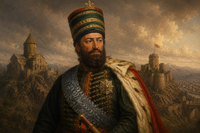
彼の名は Ilia Chavchavadze.
Today, Georgians know him by another name:
正義の聖イリア.
Not because he lived behind monastery walls.
Not because he spent his life performing miracles.
But because 彼は生涯を通じて自分の民に仕えることに捧げた。
For Georgians, he became something extraordinarily rare:
国の英雄...
そして精神的な英雄。
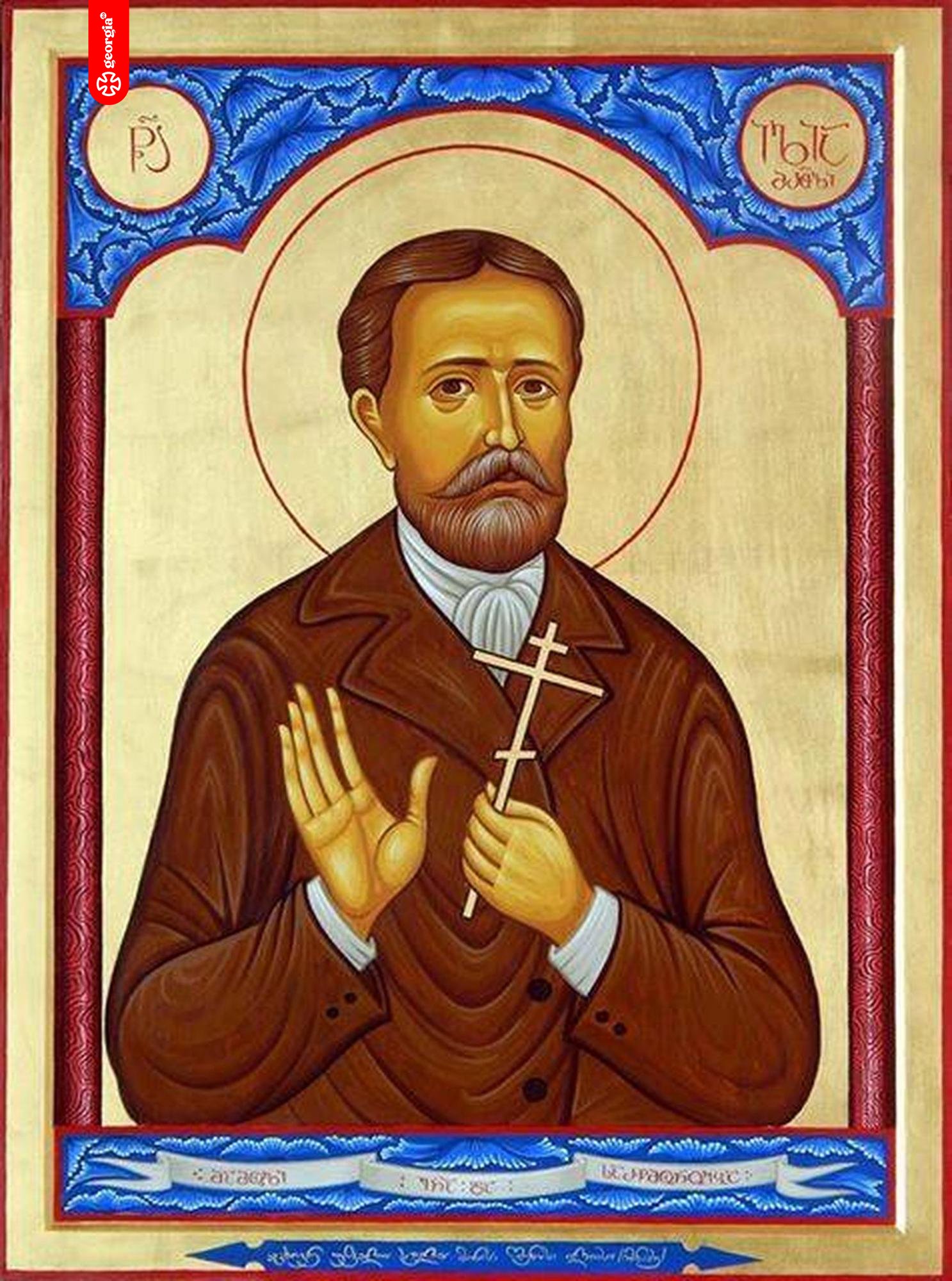
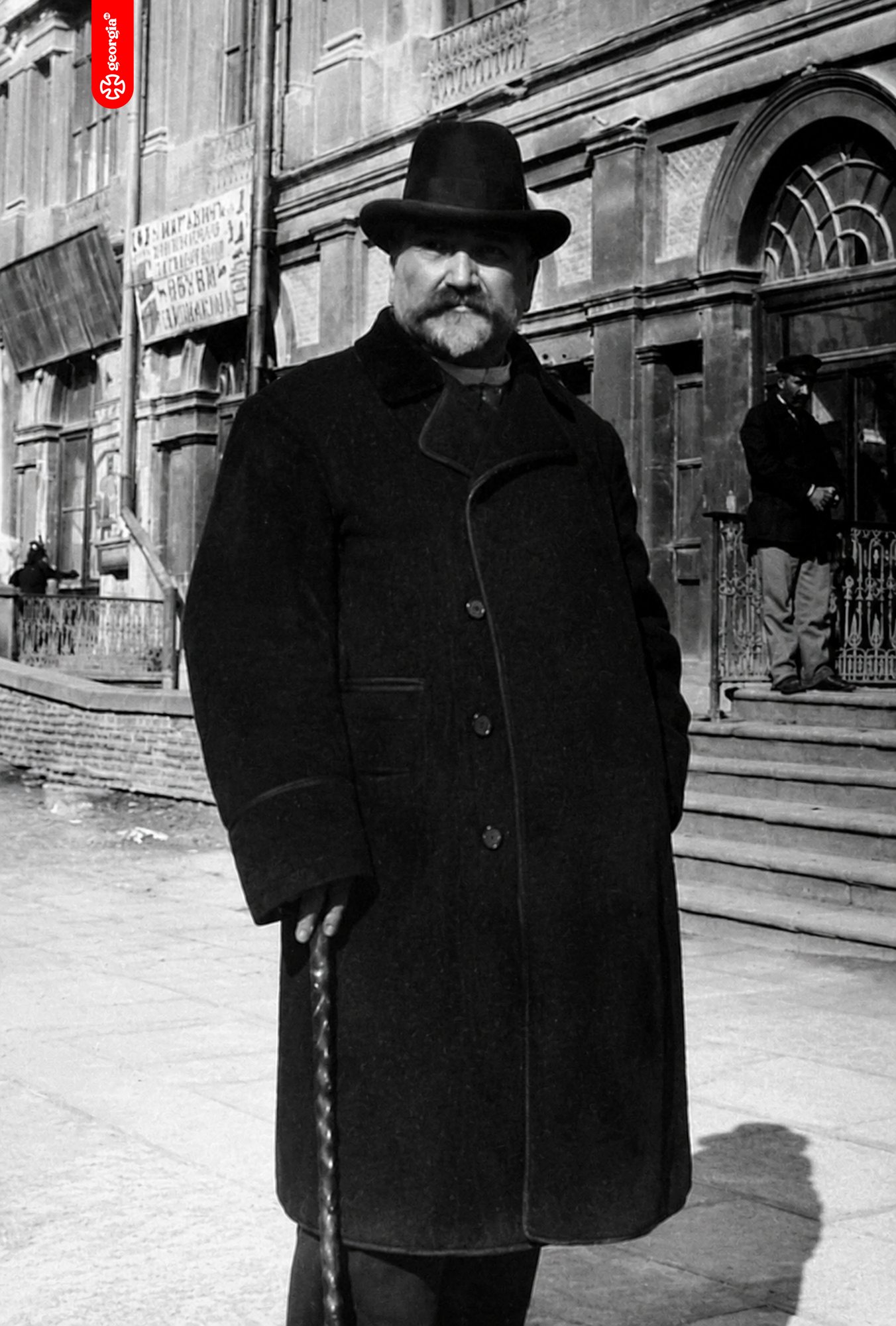
Few people have shaped modern Georgia as profoundly as Ilia Chavchavadze.
People often describe him simply as 作家.
That is true.
But it tells only a small part of the story.
He was 詩人。
小説家。
ジャーナリスト。
出版者。
弁護士。
銀行家。
教育者。
改革者。
政治思想家。
慈善家。
国家建設者。
For generations of Georgians, he became 国の良心。
Imagine being born into a world where your future had already been decided.
Where your social position defined your opportunities.
Where education belonged to only a few.
Where injustice had become ordinary…
Ilia refused to accept that this was simply how life should be.
When serfdom still shaped Georgian society, he became one of the strongest voices calling for dignity, education, justice and opportunity.
彼は、より自由でより教育を受けた市民なくして強いジョージアはありえないと信じていた。
Ilia did not write to become famous.
He did not write to entertain.
He did not write to become wealthy.
He wrote to awaken.
His stories were never meant to 慰める people.
They were meant to 対峙させる them.
To hold up a mirror.
To expose injustice.
To challenge indifference.
To ask difficult questions.
To remind people that loving your country also means having the courage to criticize it when it loses its way.
Sometimes the hardest thing a nation can do...
is look honestly at itself.
Ilia gave Georgians that mirror.
But he understood that ideas alone were not enough.
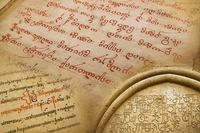
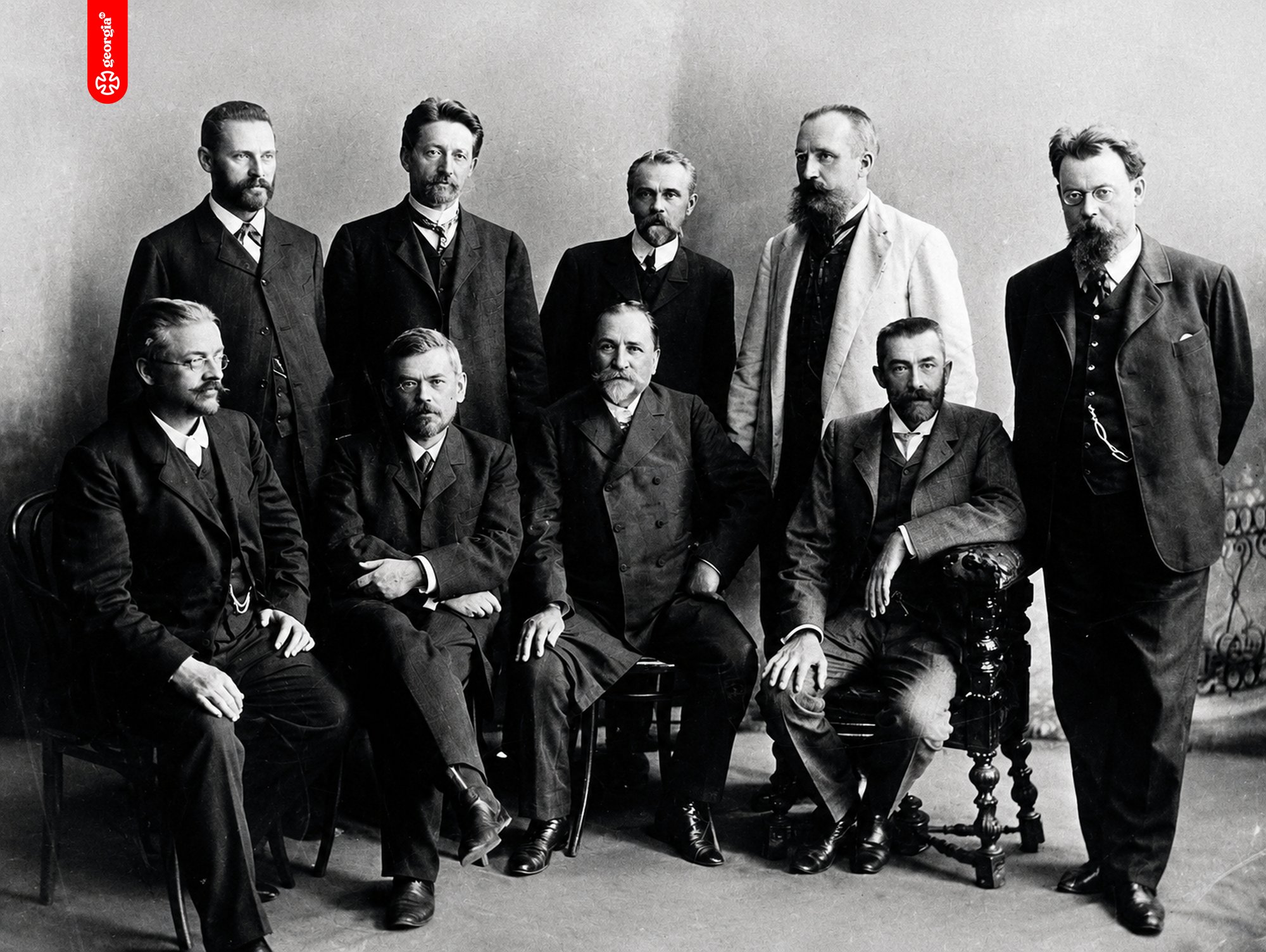
Together with like-minded Georgians, he helped create a movement ジョージア人への識字普及協会, that opened schools, established libraries, published books, supported education in the Georgian language and brought learning to thousands who had never had access to it before.
彼は、本は兵士と同じように国を守ることができると信じていた。
Because every child who learned to read in Georgian became another reason for Georgia to survive.
His vision became beautifully simple:
“言語。祖国。信仰。”
Three words.
A strategy for survival.
A reminder that a nation does not disappear only when it loses territory.
Sometimes...
it disappears when it forgets itself.
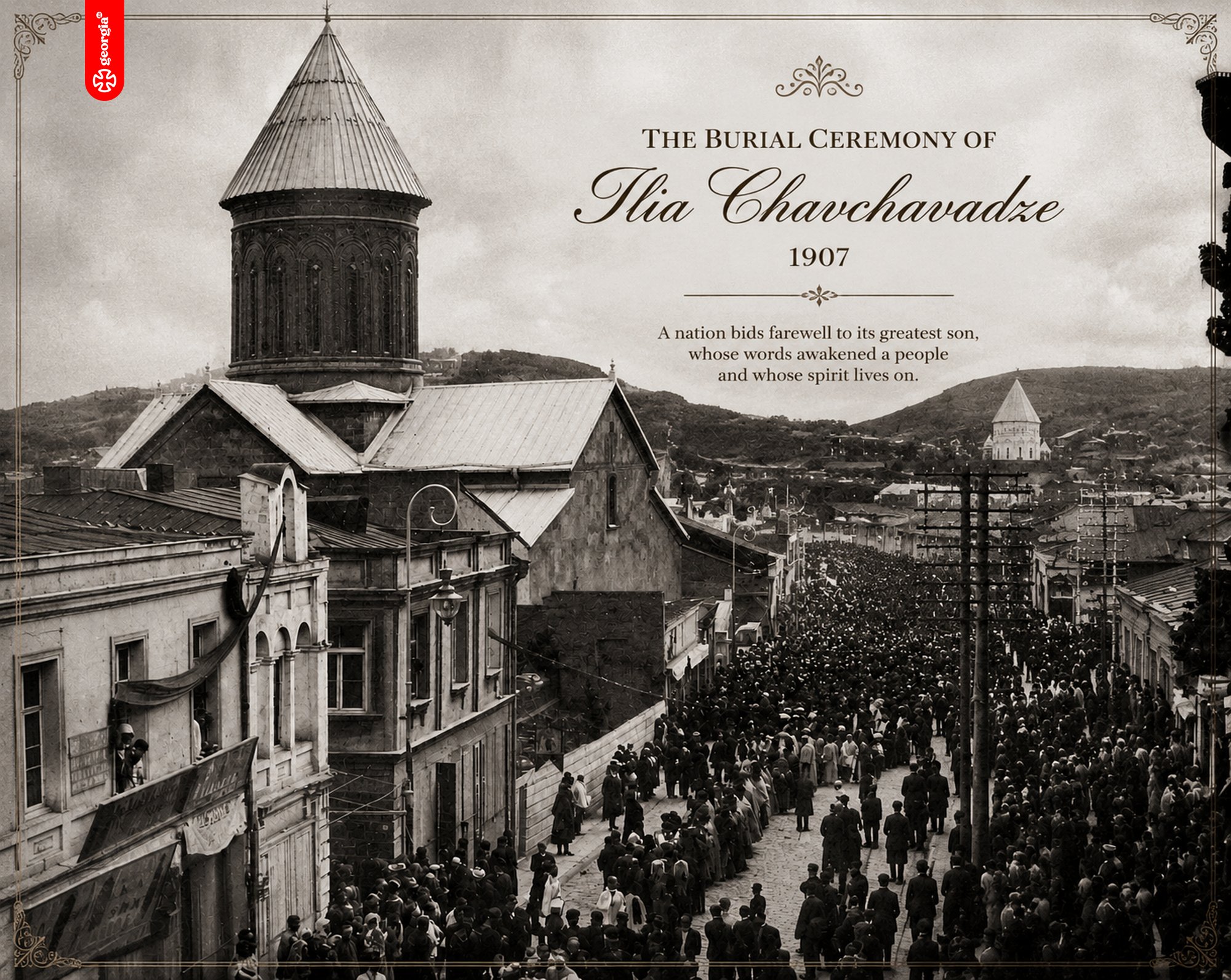
In 1907...
Ilia Chavchavadze was assassinated.
The news spread across Georgia with unimaginable speed.
People gathered.
People cried.
People felt they had lost far more than a writer.
They felt they had lost the conscience of the nation.
More than a century later, historians still debate who ultimately stood behind his murder.
But no debate has ever changed what followed.
彼の思想は生き残った。
彼の言葉は生き残った。
彼のビジョンは生き残った。
そしてジョージアも生き残った。
Walk through almost any town in Georgia...
and you will find an Ilia Street
An Ilia Square.
A monument.
Children still study his poems in school.
One of the country's leading universities proudly bears his name: Ilia State University.
His home in Saguramo still welcomes visitors today, where the rooms, books and writing desk quietly remind visitors that ideas can outlive empires.
Not because Georgians simply admire the past.
But because some people never truly become history.
They become part of a nation's character.
Perhaps that is why Ilia Chavchavadze is remembered not only as a poet.
Not only as a writer.
Not only as a saint.
But as the man who taught an entire nation that the greatest battles are not always fought with swords.
Sometimes...
they are fought with books.
With schools.
With libraries.
With newspapers.
With courage.
With ideas.
And perhaps that is the greatest legacy anyone can leave behind:
A question that people are still asking themselves more than a century later.
As Ilia wrote in one of his most beloved poems:
"今日、私は誰の人生をより良くしただろうか?"