















Some countries built their greatest churches in the middle of cities.
ジョージアはそれらをしばしば山頂へ運んだ。
道路が細くなる場所へ。
空気が薄くなる場所へ。
そして静けさが大きくなる場所へ。
なぜだろう?
もちろん、それが簡単だったからではない。
石はすべて山の上まで運ばれた。
梁はすべて手で持ち上げられた。
祈りが一つでも唱えられる前に、どの教会も並外れた努力を要求した。
では、なぜさらに高く建て続けたのか?
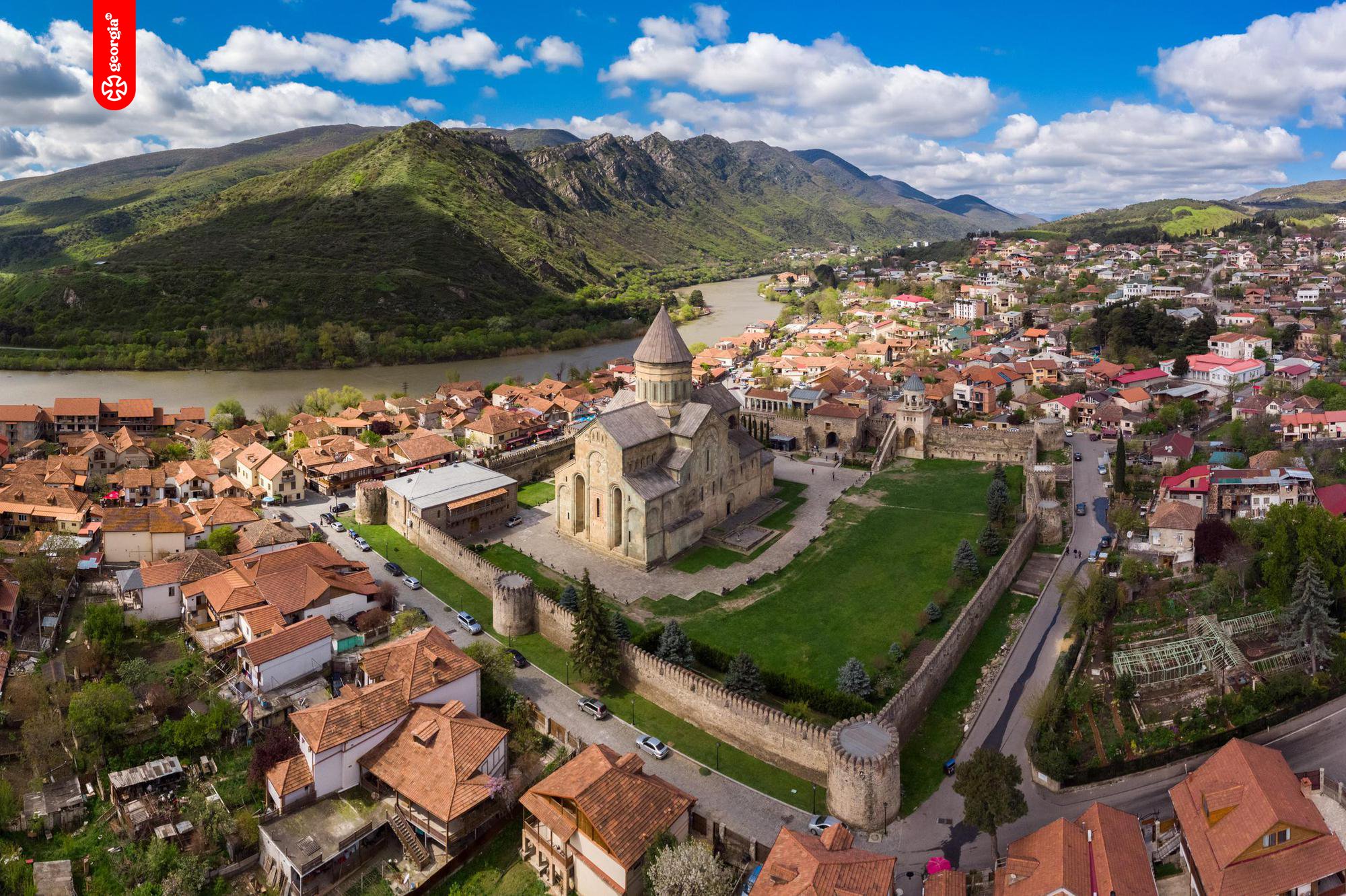
At the heart of Georgia's spiritual story stands Svetitskhoveli Cathedral.
It wasn't built on a mountain.
It stands in Mtskheta, Georgia's ancient capital, where tradition holds that Christ's Robe is buried beneath its foundations.
For centuries, it has been the spiritual heart of the nation.
Yet something remarkable happened beyond its walls.
Again and again...
Georgians carried their prayers away from cities.
Away from comfort.
Into mountains.
Onto cliffs.
Across deserts.
Toward places where the journey became as meaningful as the destination.
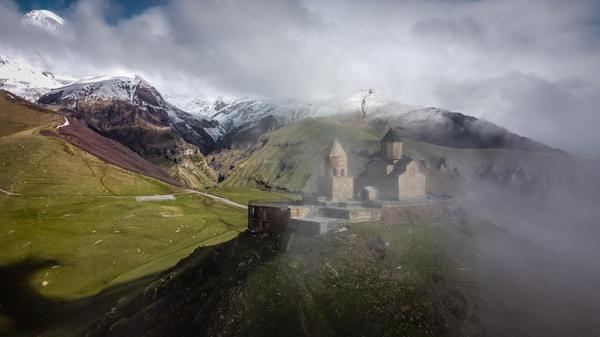
There is perhaps no image that represents this more than Gergeti Trinity Church.
Standing at 2,170 metres beneath the towering peak of Mount Kazbek, it seems almost impossible that anyone chose this exact place to build.
The village lies below.
The valley stretches beneath it.
Yet the church climbs another four hundred metres toward the sky.
For centuries, travellers have made that final ascent.
Not because faith required altitude.
But because some journeys prepare us before we arrive.
Gergeti became the symbol of climbing toward the sky.

Far to the south, another mountain tells a similar story.
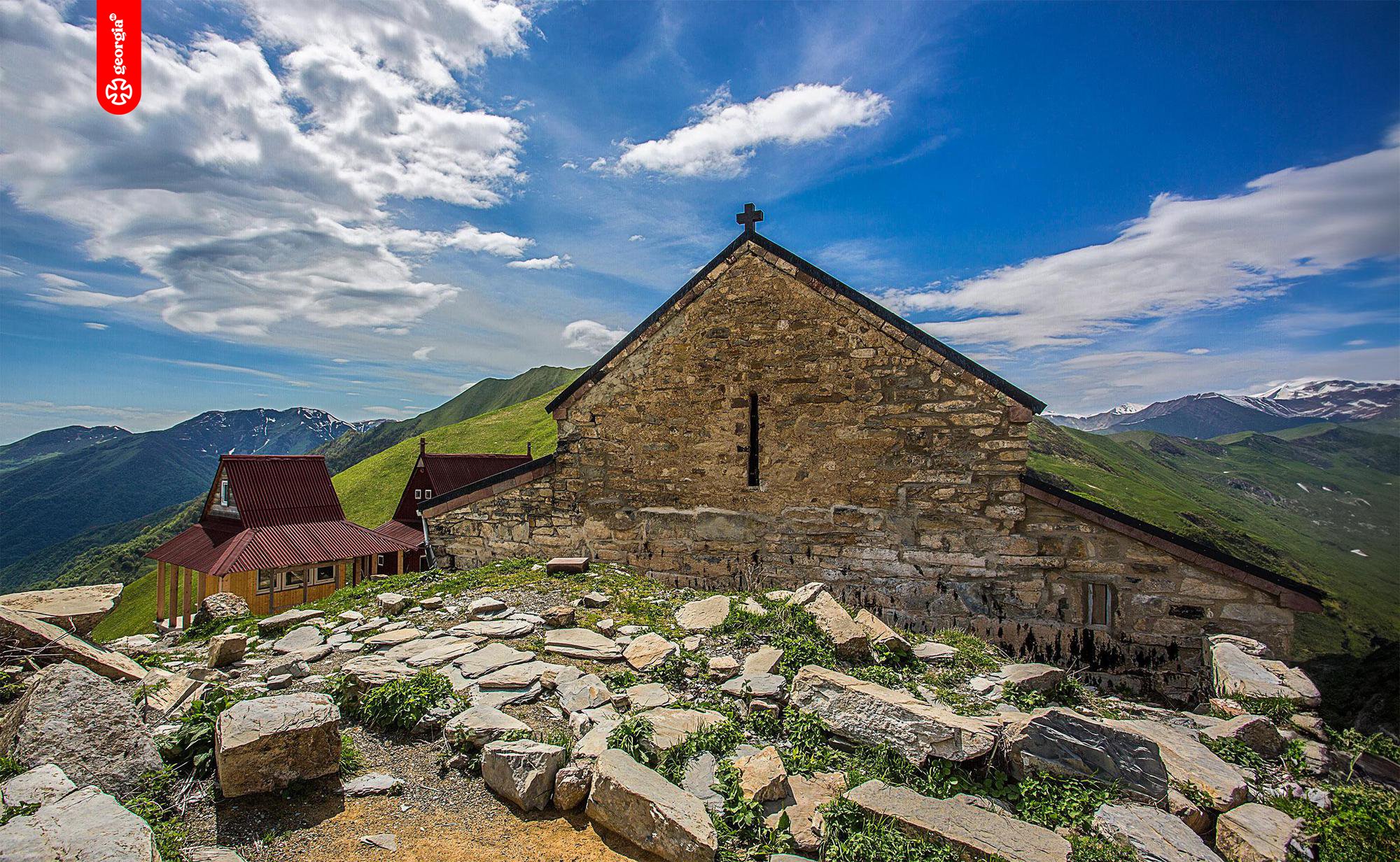
High above Mtiuleti, Lomisi Church stands at more than 2,300 metres above sea level.
Every year, thousands of pilgrims still climb the mountain during the centuries-old Lomisoba festival.
No grand city.
Just people walking uphill together, as generations before them have done.
Lomisi became the symbol of faith carried uphill by generations.
To the northwest, among the snow-covered peaks of Svaneti, stands Lamaria Church in Ushguli—one of Europe's highest permanently inhabited communities.
Life here has always been shaped by altitude.
The mountains.
The winters.
The isolation.
Faith was never something separate from daily life.
It lived alongside it.
Lamaria became the symbol of living where faith and the mountains became one.

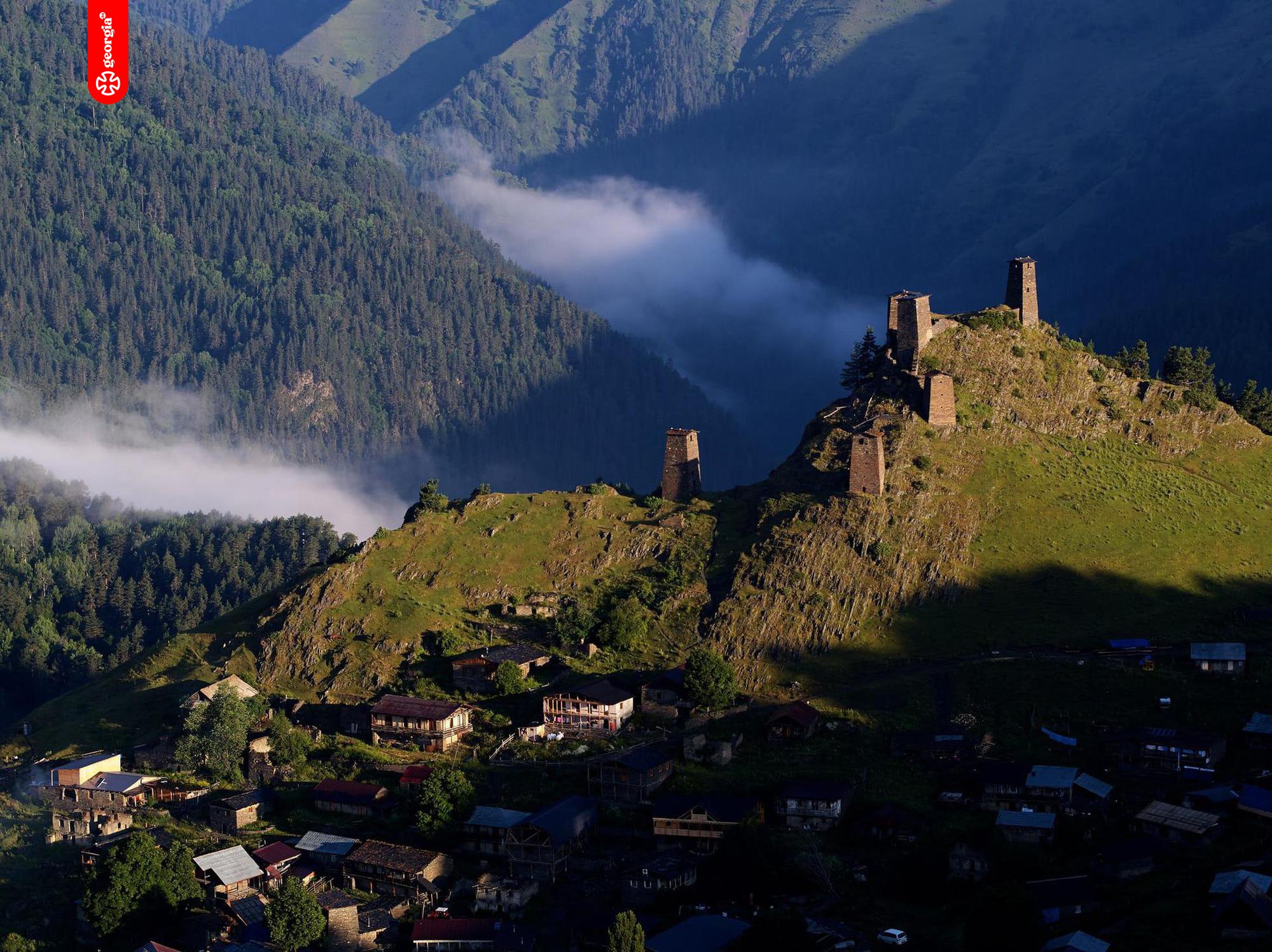
Deep in the highlands of Tusheti, the churches of Omalo stand beside ancient defensive towers.
Here, belief and survival shared the same landscape.
Villages defended their people.
Churches protected their spirit.
Together they watched over one of Georgia's most remote frontiers.
Omalo became the symbol of faith standing watch at the edge of the Caucasus.
Not every sacred place reached toward heaven through altitude.
Some reached through perspective.
Jvari Monastery rises above the meeting of the Aragvi and Mtkvari rivers, overlooking the place where Georgia's history and Christianity became forever intertwined.
It reminds us that sometimes the greatest view is not measured by height...
but by what it allows us to see.
Jvari became the symbol of looking over the land.

And then there is David Gareja.
No forests.
No glaciers.
No mountain peaks.
Only wind.
Stone.
And silence.
Instead of building upon the mountain, monks carved their monastery into the desert cliffs themselves.
A completely different landscape.
The same search.
David Gareja became the symbol of finding God in silence.

Georgia never separated faith from the land beneath it.
It would be easy to think these places were chosen simply for the view.
But views alone cannot explain the effort.
These churches became places of refuge during invasions.
Homes for treasured manuscripts and icons.
Landmarks for travellers crossing dangerous mountain passes.
Symbols of communities that refused to disappear.
Yet even practicality cannot fully explain why Georgians kept returning to the highest places.
Perhaps Georgian churches were never built to shorten the distance between earth and heaven.
After all...
no mountain is high enough for that.
Perhaps they were built to slow the journey.
To remind every traveller that some places should never be reached in a hurry.
Because with every step...
The noise grows quieter.
The horizon grows wider.
The mountain asks for patience.
The silence asks for attention.
ジョージアの最も高地に建つ教会は、最も高い建物になるために造られたのではない。それらは最も壮大な風景の一部として在るために建てられたのだ。
自然を征服するためではなく、そこに属するために。
Perhaps that is why they continue to move us centuries later.
Not because they stand above the mountains.
But because they remind us how small we are among them.
Some journeys are not measured by the distance you travel.
But by the perspective you gain before you arrive.