















There are very few occasions when you can walk into somebody’s home, throw sweets around the room and be thanked for your excellent manners.
A Georgian New Year is one of them.
You do, however, have to arrive at the right moment.
The first person to enter a home after the year begins has a particular responsibility. According to tradition, the luck of the household may arrive with them.
This person is called მეკვლე — Mekvle.
The family may have chosen them in advance.
Someone they trust.
Someone they are glad to see.
Someone believed to have a “good foot,” whose arrival will bring health, happiness and abundance.
It is quite a lot to expect from a guest.
But the guest comes prepared.
There are sweets to scatter and wishes to say aloud.
One traditional blessing begins:
“შემოვდგი ფეხი, გწყალობდეთ ღმერთი,
ფეხი ჩემი — კვალი ანგელოზისა.”
Roughly translated:
“I step inside, may God bless you.
May my footsteps be those of an angel.”
The sweets carry another wish: may the year ahead be sweet.
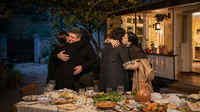
So a visitor crosses the threshold, says the words and sends candies across the room. Something that might look like a moment of festive disorder is actually a very deliberate welcome.
The household is receiving its first guest.
And, through that guest, its new year.
The custom is called Mekvleoba, and its older forms tell us what a good year once meant in very practical terms.
A plentiful harvest.
Healthy animals.
A household with enough to eat.
In recorded regional customs, the mekvle scattered wheat or rice as well as sweets. Ethnographers connect this gesture with symbolic sowing: the year was beginning, and abundance had to be invited into it.
Imagine that gesture moving from a farming household into a city apartment.
The harvest is no longer outside the window.
The family’s livelihood may have nothing to do with fields.
Still, somebody arrives carrying good wishes.
The details change between regions and families.
The degree of belief changes too.
But the act remains recognisable: you choose someone whose presence makes the beginning feel promising.
There is something very Georgian about giving good fortune a familiar face.

Of course, much of the celebration would look familiar to you.
We untangle lights.
Decorate trees.
Put presents underneath them.
Prepare too much food and gather to count down the last seconds of December.
Those scenes belong to a shared holiday language.
In Georgia, however, the gifts, decorated tree and midnight celebration are closely associated with New Year.
Georgian Orthodox Christmas comes afterwards, on January 7.
And beside the tree you recognise, there may be another one.
Cream-coloured.
Curly.
Made from wood, although at first glance it hardly looks possible.
ჩიჩილაკი — Chichilaki.
A craftsperson takes a branch, usually hazelnut and shaves it into fine strips without cutting them free.
The curls remain attached, gathering around the central stem until an ordinary piece of wood has become a small tree.
It can be decorated with fruit and sweets.
It is also known as “Basil’s beard” linking it to Saint Basil.
Chichilaki has particularly strong roots in western Georgia. In Guria, it belongs to Kalanda, the local New Year celebration observed on January 14.
Yes, January 14.
That is Old New Year: January 1 in the Julian calendar, falling thirteen days later in the Gregorian calendar we use in everyday life.
The calendar explains the second celebration.
The willingness to gather again needs rather less explanation.
In Guria, Kalanda also brings crescent-shaped pies filled with cheese and boiled egg. Elsewhere, the preparations take different forms. Georgia’s regions have their own ways of setting the table and welcoming the year.
A small wooden tree can lead you into a much larger story.
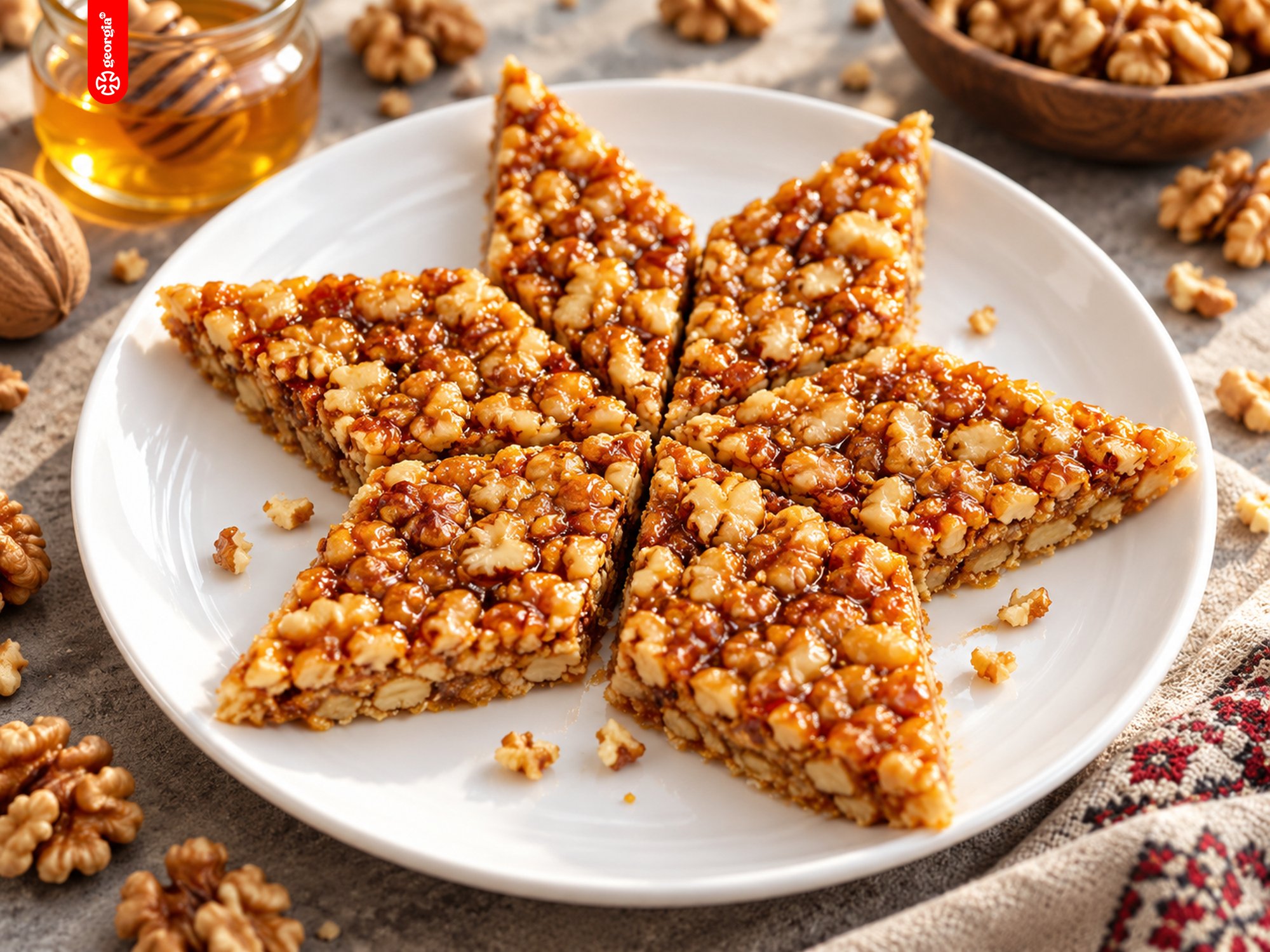
By now, somebody should probably offer you გოზინაყი — Gozinaki.
Walnuts and honey are its two main ingredients. The nuts are toasted and chopped, the honey heated, the mixture spread and cut while it is still warm.
Often into diamonds.
It sounds straightforward until you try to get the texture right.
In many families, the task belongs to whoever makes it best. That person’s experience matters: knowing when the honey is ready, how finely to cut the walnuts, when to stop stirring and start shaping.
For many Georgians, the smell alone belongs to New Year.
And here is sweetness again.
Carried through the door.
Scattered across the room.
Prepared in a kitchen and passed around a table.
The wish keeps finding a physical form.
Then comes January 2.
ბედობა — Bedoba, the “day of fate.”
According to the folk belief, how you spend this day helps determine how the rest of the year will unfold.
Good company becomes especially desirable. So do kindness, enjoyment and avoiding an unnecessary quarrel.
There are worse reasons to postpone an argument.
Taken literally, it is a considerable demand to place on one day. Taken as a custom, it asks a rather good question:
What would you like your year to contain?
And can you make room for some of it now?
You do not have to believe that January 2 can arrange the following twelve months to understand why people keep the tradition.
A day spent well is already worth something.

These customs make a Georgian New Year much larger than the moment the clock reaches twelve.
There is preparation behind it: hands shaving a branch, chopping walnuts, arranging the table.
There are people to think about: who should come first, whom to visit, who will spend the day with you.
And there are wishes specific enough to hold in your hands.
Something sweet.
Something shared.
Something brought into another person’s home.
We cannot know what the year will bring.
But we can decide what we bring to its beginning.
In Georgia, that might be a handful of candies, a blessing learnt from someone older and a knock on the door.

If you would like to welcome the New Year in Georgia — not simply as a visitor, but the way we celebrate it ourselves — join us on Georgia Countdown, December 28–January 2.
A small-group journey through Georgian traditions, festive tables, winter landscapes and the warmth of a New Year spent together.
Price: 2,870 GEL per person