















In 1983, a young writer named Soso carried his manuscript into a publishing house and waited for somebody to read it…
More than forty years later, every person who has ever worked inside an office understands exactly why he may still be waiting…
The publishing house is full of people.
Telephones ring.
Doors open and close.
Documents travel from one desk to another.
Meetings are arranged.
Plans are discussed.
Employees appear extremely occupied.
The only thing that does not happen is the one thing the building supposedly exists to do:
Nobody reads the manuscript…
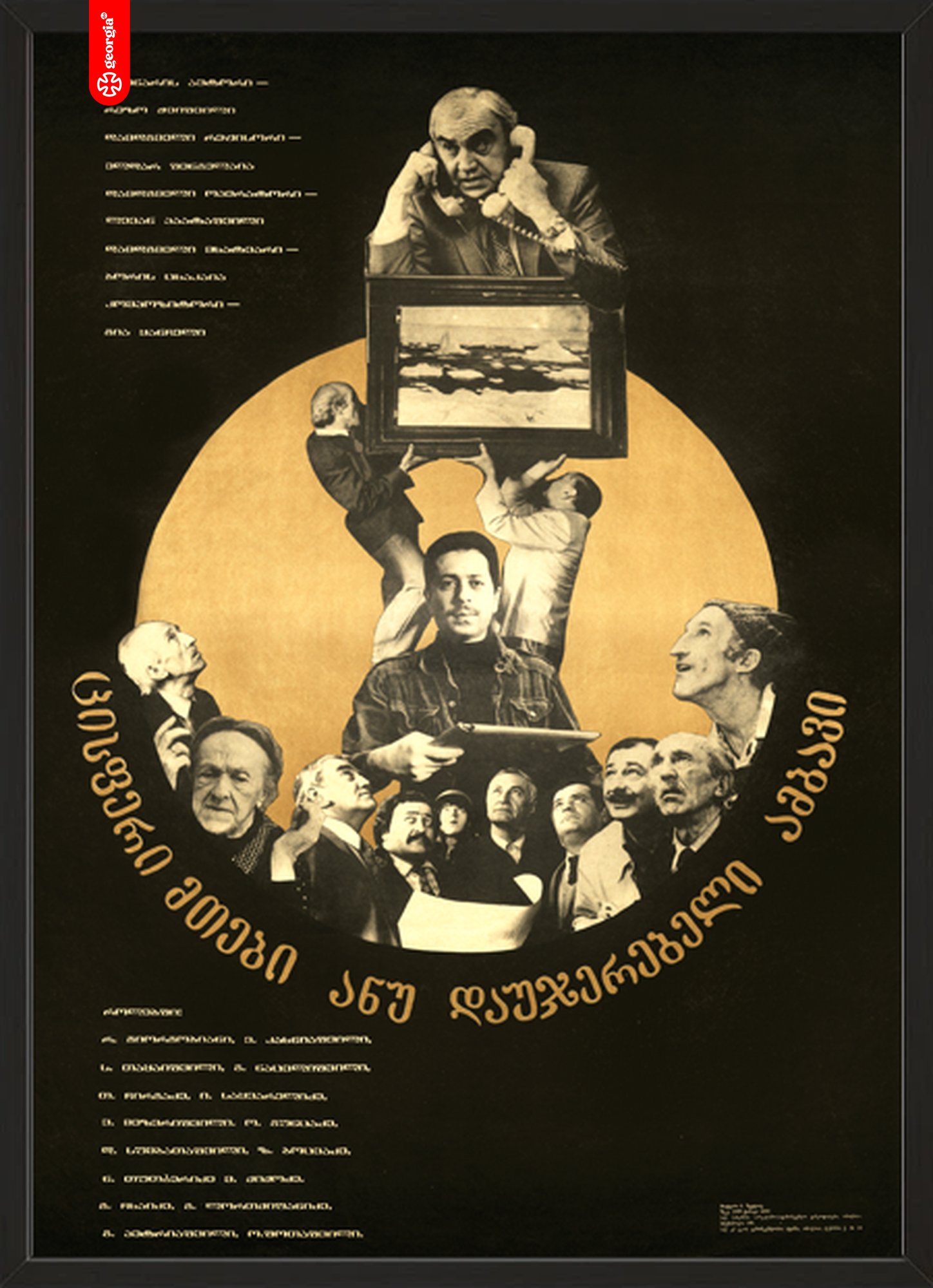
This is the world of Blue Mountains, or Unbelievable Story.
The 1983 Georgian film directed by Eldar Shengelaia, written by Rezo Cheishvili and accompanied by the unmistakable music of Giya Kancheli.
That lasting importance was internationally recognised in 2014, when a restored version of the movie was selected for Cannes Classics at the 67th Cannes Film Festival. Presented by the Georgian National Film Center and digitised from the original negative in 4K, the film was introduced to a new generation more than thirty years after its creation.
It is a comedy about a writer trying to have his work considered by a publishing house.
It is a satire of Soviet bureaucracy.
It is also one of those rare films that somehow escaped the period in which it was created.
You do not need to be Georgian to understand it.
You do not need to remember the Soviet Union.
You do not need to work in publishing.
You only need to have sent an email that nobody answered.
Soso Is Still Waiting…
Soso does not arrive at the publishing house demanding immediate fame.
He does not behave like an outraged genius surrounded by people incapable of recognising his talent.
He simply wants somebody to read what he has written.
This seems like a reasonable expectation.
He has, after all, brought a manuscript to a publishing house.
But reason has very little influence over what follows…
Soso enters one office.
He is sent to another.
Someone has the manuscript but has not yet read it.
Someone else was supposed to read it but thought another colleague was handling it.
One person is busy.
Another is leaving.
A third has an entirely unrelated matter requiring immediate attention.
Nobody openly says no.
That would almost be easier.
Instead, everyone agrees that the manuscript should certainly be read, just not by them and preferably not today.
Soso continues visiting.
He asks politely.
He waits patiently.
He receives reassuring answers that do not contain any actual information.
Progress always appears very close.
It simply never arrives.
The manuscript moves.
Responsibility moves.
Time moves.
Nothing else does.
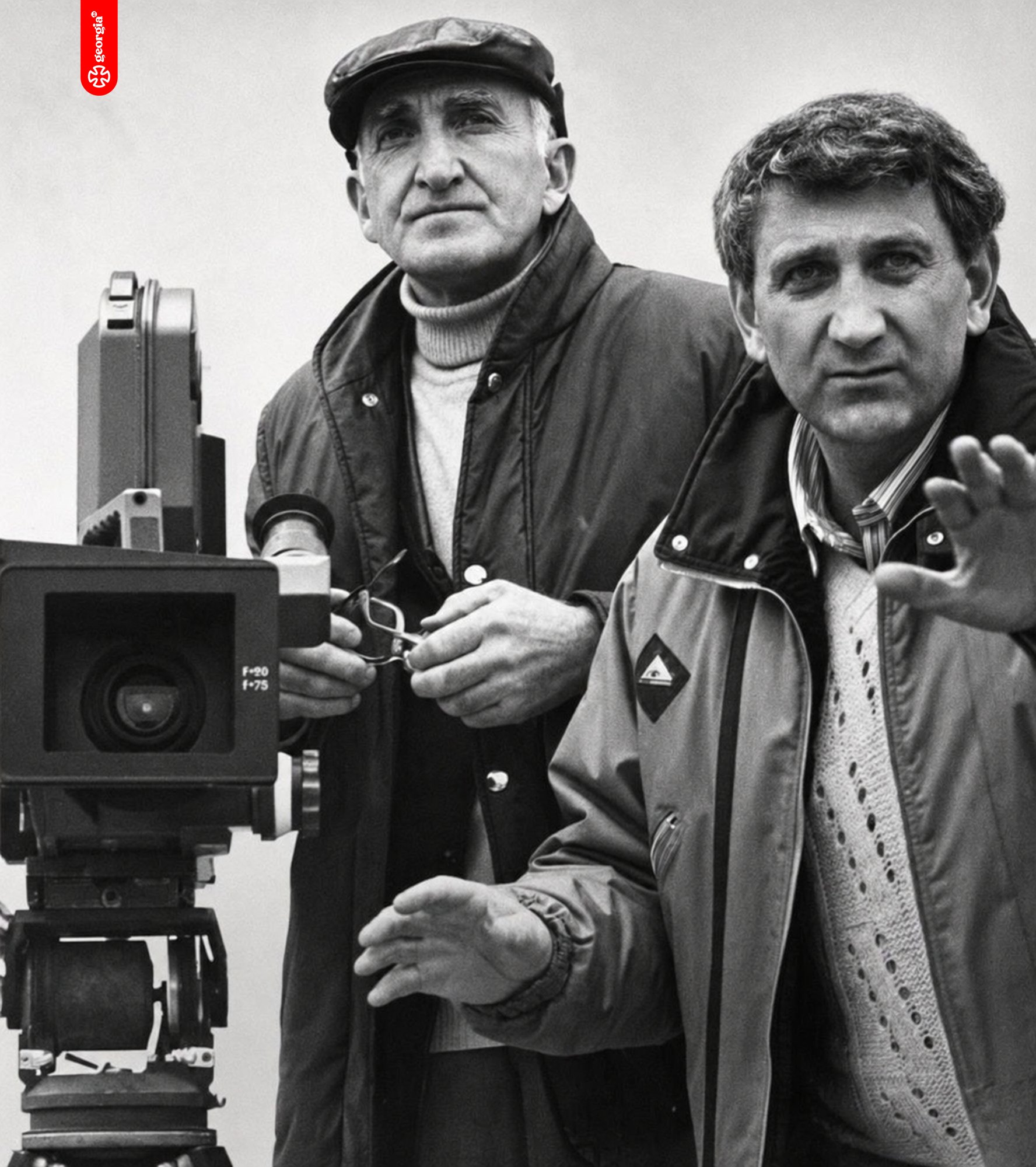
The Publishing House Is Georgian.
The Bureaucracy Requires No Translation.
It would be easy to look at Blue Mountains and describe it as a film about Georgian bureaucracy.
But that would make its world much smaller than it is.
The film was made in Soviet Georgia and emerged from a particular political and institutional environment. Yet the behaviour it captures belongs to no single country.
Every society has created its own version of Soso’s publishing house.
The furniture changes.
The procedures change.
The language changes.
The forms may become websites.
The folders may become shared drives.
The meeting may move online.
But responsibility still possesses the mysterious ability to travel through an entire organisation without ever stopping beside one identifiable person.
This is not a story about Georgians being uniquely inefficient.
It is a story about what systems can do to ordinary people and what ordinary people learn to do inside systems.
Bureaucracy encourages everyone to perform the appearance of movement while making personal responsibility increasingly difficult to locate.
A document has been forwarded.
A request has been registered.
The matter has been discussed.
A colleague has been informed.
A meeting will be arranged.
A decision is expected.
Everything is happening.
Nothing is happening.
This experience is international.
The Georgian achievement was turning it into art.
Everyone Is Busy
One of the film’s greatest jokes is that nobody appears to be doing nothing.
That would be too obvious.
The publishing house is filled with activity.
Employees are walking through corridors,
holding papers,
entering rooms and
discussing plans.
Their days contain interruptions,
conversations,
personal interests,
workplace rituals and
issues that feel much more immediate than the work directly in front of them.
From a distance, the organisation might look impressively alive.
Only Soso understands that all this movement has produced no result.
This is why the film still feels so contemporary.
Modern workplaces have become much faster since 1983.
We have instant messages,
video calls,
shared calendars,
digital task boards,
automated reminders and
emails marked “urgent.”
We can now avoid making a decision with unprecedented efficiency.
A meeting can be held to prepare for the meeting in which the decision may be discussed.
A document can receive twelve comments without anyone approving it.
An email can be forwarded to six people, each of whom reasonably assumes that one of the other five will answer.
Technology has eliminated many delays.
It has also given delay considerably better tools.
If Soso arrived today, he would probably submit his manuscript electronically.
He would receive an automatic confirmation.
Someone would create a task.
The task would be assigned.
Then reassigned.
Then moved into a column called “Under Review.”
And somewhere, in a beautifully organised digital system, it would remain completely unread.

We Are All Soso
The first time we watch Blue Mountains, many of us naturally identify with Soso.
We know what it feels like to wait for someone to recognise the importance of something we have created.
We know the frustration of asking a simple question and receiving an answer that creates three more questions.
We know what it is like to hear “soon,” “later,” “we are discussing it” or “someone will contact you.”
Soso represents anyone who has ever waited for:
An application to be reviewed.
A manager to approve something.
A client to reply.
A company to process a request.
A government office to locate a document.
A colleague to open an attachment.
A person to make a decision they have been carefully postponing.
He is patient because he believes the system will eventually do what it was created to do.
That belief becomes increasingly difficult to maintain.
Still, he returns.
Still, he asks.
Still, he hopes that somewhere inside the building there must be one person who has reached the second page.
We recognise him because nearly everyone has, at some point, stood outside a closed office door holding something that mattered.
Unfortunately, We Are Also Everyone Else
This is where Blue Mountains becomes more uncomfortable and much more brilliant.
We are not always Soso…
Sometimes we are the person who has not opened the attachment.
Sometimes we genuinely intend to answer later.
Sometimes we receive a request at the worst possible moment, place it carefully beside several other urgent matters and gradually stop seeing it.
Sometimes we pass a decision to someone else because we are uncertain, overwhelmed or afraid of making the wrong choice.
Sometimes we attend a meeting about a problem because discussing it feels safer than taking responsibility for solving it.
Sometimes we are tired.
Sometimes we are distracted.
Sometimes we believe another person is handling it.
Sometimes another person believes exactly the same thing about us.
And sometimes we are Soso in one part of our life while being a member of the publishing house in another.
We are waiting for someone to answer our email while ignoring somebody else’s message.
We are frustrated that our request has not been reviewed while postponing a task that matters deeply to another person.
We want the world to recognise our urgency while quietly reorganising everyone else’s.
That is why almost anyone can find themselves in this film.
The character we recognise may depend on our age, our profession, our responsibilities or simply the kind of week we are having.
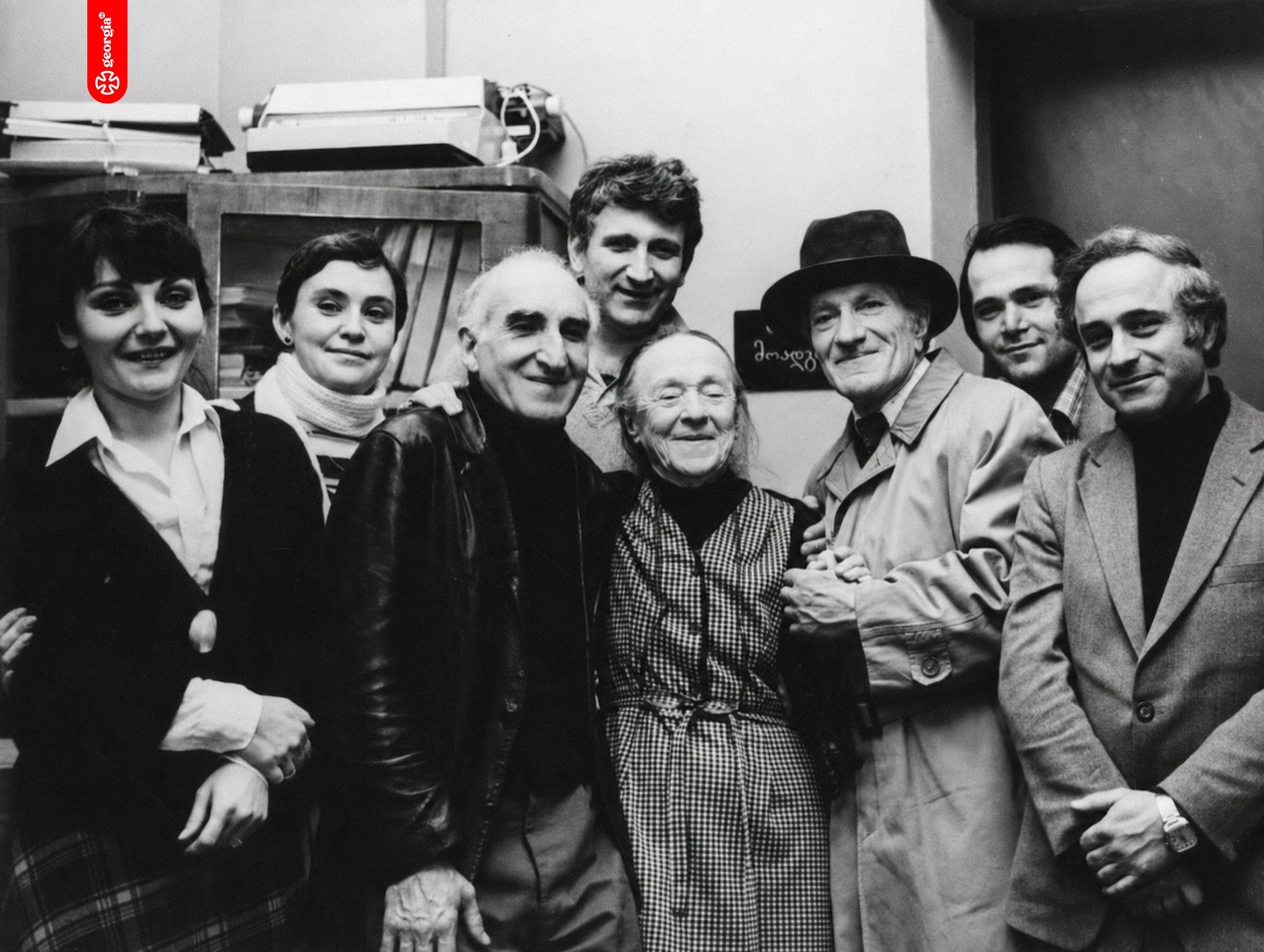
The Film Does Not Hate Its Characters
This distinction is important.
Blue Mountains is deeply satirical, but it is not cruel.
Its characters are not presented as monsters conspiring against Soso. Most of them do not appear to wish him any harm at all.
They are ordinary people.
They have habits,
worries,
distractions,
friendships,
personal interests and
positions within an institution that existed before they arrived and will probably continue after they leave.
They are familiar enough to make us laugh because we have met them.
They are human enough to make us uncomfortable because we have also been them.
The film does not place the audience safely outside the building, allowing us to point at the foolish people trapped inside.
It quietly brings us through the door.
We laugh because we recognise the behaviour, not because we believe ourselves superior to it.
That is the film’s great kindness.
Nobody is entirely innocent.
Nobody is entirely condemned.
Even Soso’s patience contains its own absurdity. At some point, we begin to wonder why he continues returning to an institution that has shown him so clearly what it is.
But what else can he do?
The publishing house is where manuscripts are supposed to be read.
The system is failing him, yet he has nowhere else within that system to go.
This is funny.
It is also painfully familiar.
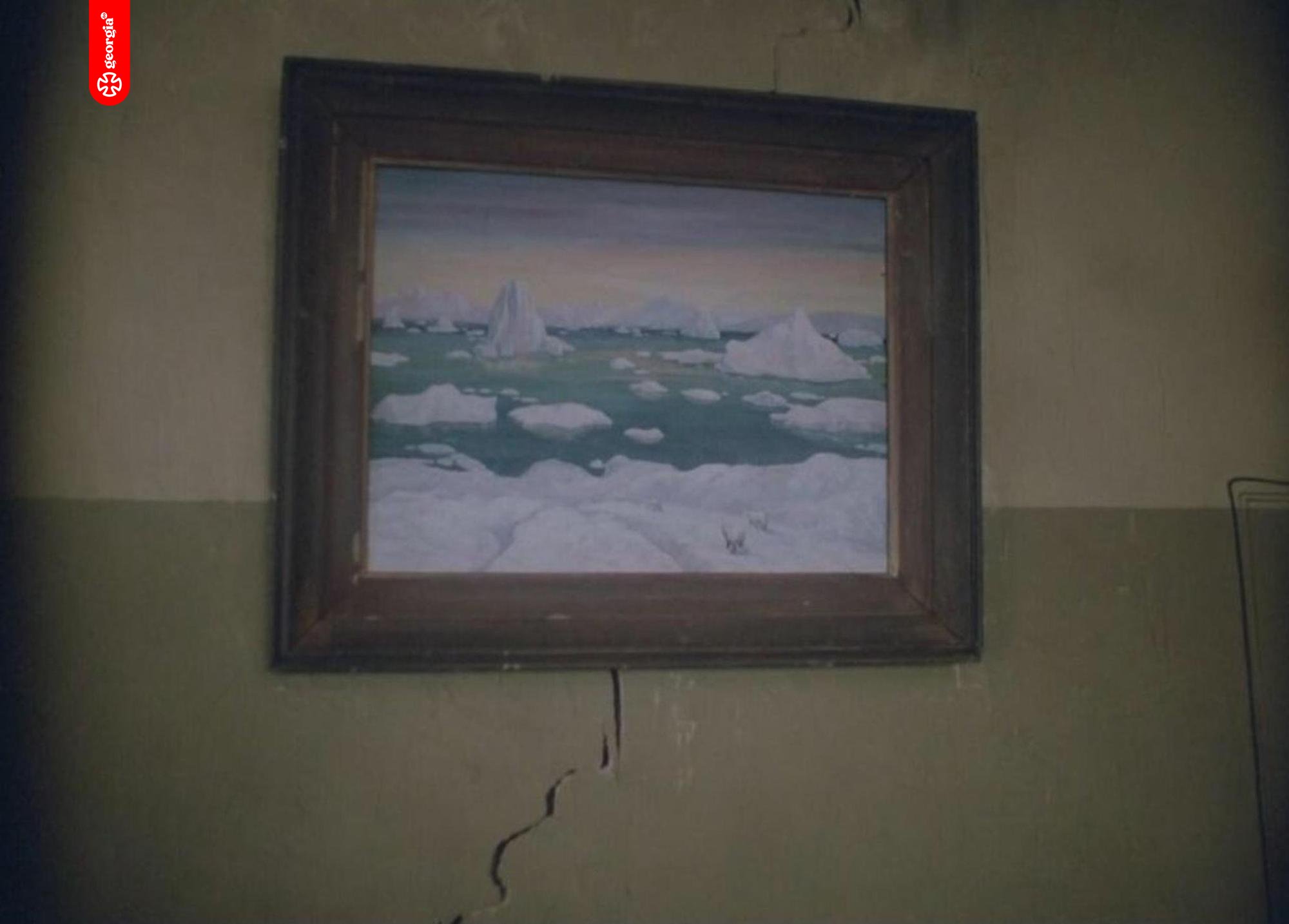
The Crack in the Wall
While everyone continues with the business of appearing busy, the building itself begins to object.
There are warnings.
There are visible signs that something is wrong.
The structure is no longer quietly cooperating with the institution inside it.
Yet even this becomes another matter to discuss,
postpone,
reinterpret or
place within the general circulation of responsibility.
The metaphor is not subtle.
It does not need to be.
The building is telling everyone what the audience already understands: a system cannot survive forever simply because its occupants have become skilled at ignoring its weaknesses.
But the remarkable thing is how casually the warning is absorbed into daily life.
People can adapt to almost anything if it happens gradually enough.
A small crack becomes part of the wall.
A strange noise becomes something the building always does.
A temporary problem remains long enough to become an established working condition.
Eventually, the abnormal becomes ordinary.
This is not only about Soviet institutions.
It is about offices, organisations, governments and sometimes entire societies.
It is also about families, relationships and individual lives.
We can become so accustomed to a problem that we stop asking whether it should be there at all.
The crack grows.
The meeting continues.
New Building, Same People
We often place enormous faith in visible change.
A new office.
A new system.
A new manager.
A new platform.
A new strategy.
A new name printed on the same door.
These changes can be valuable.
Sometimes they are necessary.
But Blue Mountains understands that replacing the surroundings does not automatically replace the habits developed inside them.
People carry systems within themselves.
We learn how much responsibility to accept.
We learn which problems can be postponed.
We learn what language makes inactivity sound professional.
We learn how to appear cooperative without becoming personally accountable.
And unless those habits change, a new building can eventually become the old building with better windows.
This may be the film’s most timeless observation.
Institutions are not only offices, rules and organisational charts.
They are repeated human behaviour.
The walls can change overnight.
Behaviour usually requires longer.
A Film Created in 1983 That Still Feels Contemporary
Many older films remain important because they help us understand the period in which they were made.
Blue Mountains does something more unusual.
It explains its own period while continuing to explain ours.
Its visual world belongs to another era, but its emotional experience is completely current.
Soso’s manuscript could become:
A proposal awaiting approval.
A CV sitting unread in an inbox.
A creative project moving between departments.
A customer complaint forwarded repeatedly.
A medical document requiring one more signature.
A request that everyone considers important but nobody considers theirs.
The publishing house could become:
A corporation.
A university.
A ministry.
A production company.
A start-up.
A nonprofit organisation.
An international institution.
A family group chat attempting to decide where to have dinner…
The scale changes.
The behaviour survives.
Perhaps Blue Mountains did not predict the future.
Perhaps it simply understood people well enough that the future could not make it obsolete.
Georgia Has Always Had a Habit of Arriving Early
There is something extraordinary about discovering a Georgian film created decades ago and realising how modern it still feels.
Georgia has produced cinema,
literature,
architecture,
design and
art that refuse to remain safely inside their historical period.
This does not mean that Georgian artists somehow knew what offices would look like in the twenty-first century.
They understood something more valuable.
They understood human behaviour.
They understood how absurdity operates.
They understood that humour could reveal truths that serious declarations sometimes could not.
They understood that the smallest, most ordinary environment
a corridor,
a desk,
a meeting,
an unread manuscript could contain an entire political and social system.
And they knew how to speak about that system without producing a lecture.
The film trusts the audience to understand.
More than forty years later, we still do.
Why Everyone Should Watch It
Watch Blue Mountains if you love Georgian cinema
Watch it if you have never seen a Georgian film before.
Watch it if you work in an office.
Watch it if you avoid offices whenever possible.
Watch it if you have ever created something and waited for another person to take it seriously.
Watch it if you have ever promised to read something later.
Watch it if you have attended a meeting that could have been an email.
Watch it if you have received an email that should probably have been a decision.
Watch it if you have watched a small problem become a large problem while everybody assumed somebody else would handle it.
Watch it because it is intelligent without becoming self-important.
Watch it because it is critical without becoming bitter.
Watch it because it understands that the most powerful satire does not need to shout.
And watch it because Georgia created something that belonged to its own time so completely that it eventually became timeless.
The Manuscript Is Still With Us
More than forty years ago, Soso carried his manuscript into a publishing house.
The world has changed enormously since then.
The Soviet Union disappeared.
Offices became digital.
Communication became instant.
Entire libraries began fitting inside devices we carry in our pockets.
But every new generation can watch Blue Mountains and understand it immediately.
The language of the film is Georgian.
Its frustration is international.
Its humour belongs to anyone who has ever existed inside a system.
And its characters belong to all of us.
Perhaps the most remarkable thing about Blue Mountains is not that it predicted the future.
It is that it understood the present so clearly that every future generation would recognise itself inside it.
The offices have changed.
The telephones have changed.
The manuscript may now arrive as a PDF.
But somewhere, Soso is still waiting for someone to read it.
The film did not remain trapped in 1983.
It escaped.
For Georgian audiences who have carried its dialogue into everyday life, one final instruction is enough:
გაიტანეთ გრენლანდია.
Take Greenland away.
For everyone else, let its meaning remain unexplained until the credits roll.