















Before mobile phones told parents where their children were, Georgia had balconies.
Every neighbourhood had its own communication system: one mother leaning over the railing and shouting her child’s name loudly enough for three courtyards, four apartment buildings and at least one unrelated grandmother to hear.
“Come upstairs and eat!”
“Can I come in five minutes?”
“Come now. You’ll eat and go straight back outside.”
This was perhaps the first great lie of Georgian childhood.
You went upstairs believing the agreement was legally binding.
Then you washed your hands.
Then you ate. Then someone remembered your homework.
Then you had to change your clothes.
Then it was suddenly too late.
Downstairs, the other children continued playing without you.
You watched them from the balcony — the very same balcony that had betrayed you.
The Courtyard Raised You
A Georgian child was rarely raised by one household alone.
You belonged to your parents,
your grandparents,
your extended family,
the neighbours and occasionally to women whose names you did not know but who nevertheless had full authority to tell you to put on a jacket.
Georgian childhood offered enormous freedom but absolutely no privacy.
You could spend the entire day outside without a telephone, a GPS tracker or an adult visibly supervising you. Yet somehow, every adult in the neighbourhood knew exactly where you were.
If you climbed somewhere dangerous, argued with another child or used a word you were not supposed to know, the information could reach your family before you did.
Georgian courtyards had surveillance long before security cameras.
It wore a headscarf and knew your mother.
The courtyard itself was an independent country.
It had borders,
alliances,
political crises
and occasional civil wars.
Friendships were formed before lunch and permanently destroyed by three o’clock. Wars began over footballs, bicycles, skipping ropes and accusations of cheating. Peace treaties were usually signed ten minutes later because there were not enough children to maintain two separate countries for very long.
The oldest child was generally in charge — not through democratic elections, but because they knew the rules of every game and owned the ball.
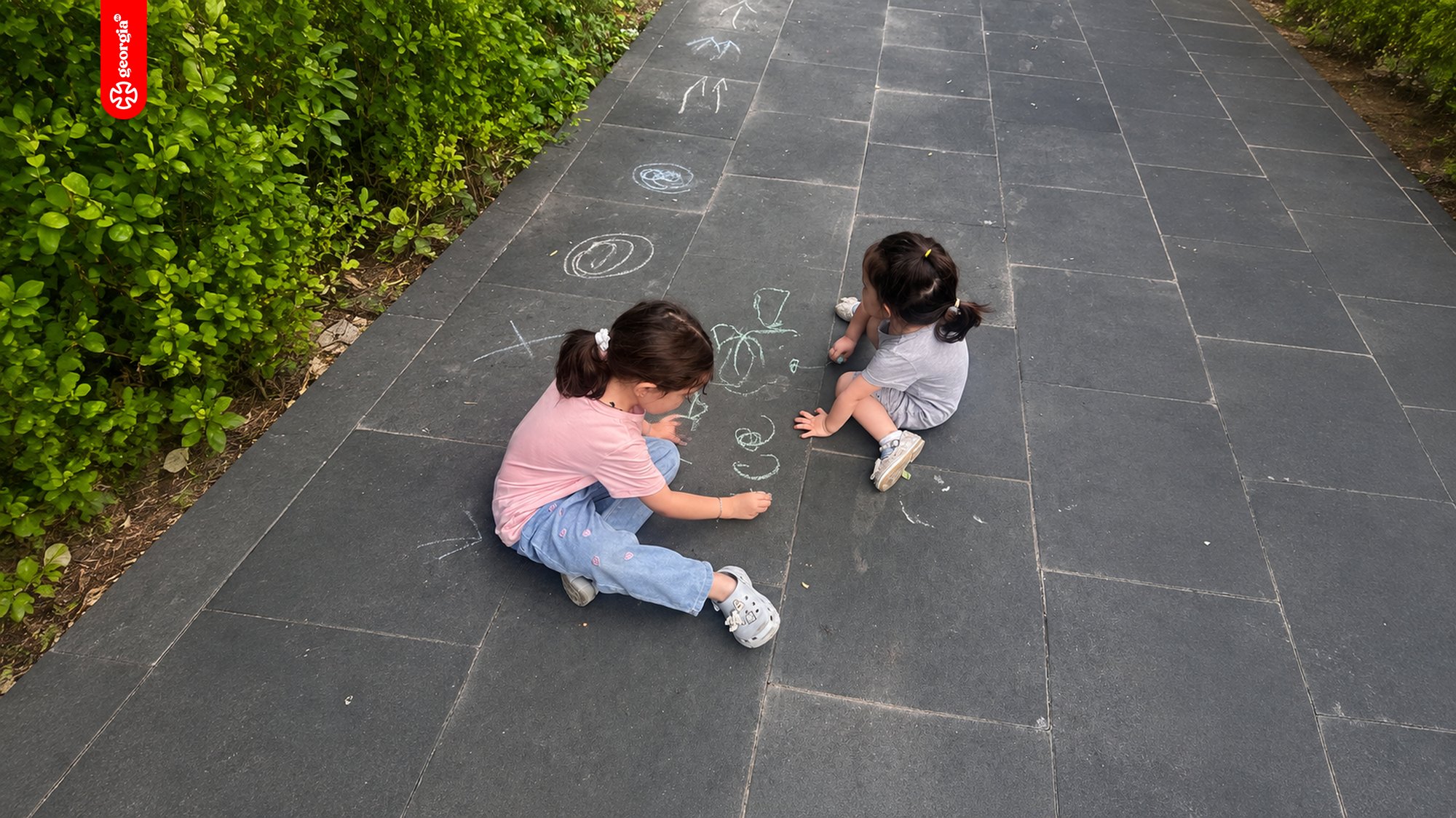
Our Games Were Not Designed by Child Psychologists
Georgian children played the same games as children everywhere else: tag, hide-and-seek and various competitions involving stones, sticks and absolutely no adult supervision.
The difference was the language.
Before hide-and-seek began, the seeker covered their eyes while everyone else ran to hide. But simply asking a child not to peek was apparently considered insufficient. A formal warning had to be issued:
„ვინც იხილოს, იხილოს,
შავ კუბოში იძინოს.“
Whoever dares to take a peep,
in a black coffin shall they sleep.
Yes, this was a children’s rhyme.
Other countries may have punished cheating by making the child count again. Georgian courtyards preferred clarity:
if you peeked, there would be a coffin.
A black one.
Nobody found this alarming.
Nobody questioned whether the punishment was proportionate.
Nobody suggested losing a turn instead.
We cheerfully accepted the terms, covered our eyes and continued playing.
When the counting ended, the seeker shouted:
“Whoever is not hidden, it is not my fault!”
This sentence offered complete legal protection against every possible consequence.

Summers Belonged to the Village
For many Georgian children, summer meant being delivered to grandparents or relatives in a village and collected several weeks later with darker skin, scratched knees and a digestive system composed almost entirely of fruit.
We ate cherries directly from trees, berries from bushes and fruit that had fallen onto the ground but was declared perfectly clean after being wiped on somebody’s shirt.
Village children knew which tree belonged to which neighbour.
This information rarely affected whether they ate from it.
By the end of the summer, your grandmother would examine you carefully and announce that you had become too thin.
This was medically remarkable, considering that she had been feeding you continuously since June.
A Georgian grandmother never asked whether you were hungry.
Hunger was not considered relevant to the feeding process.
She asked what you wanted to eat.
“Nothing” was understood to mean that you had not heard the question correctly.
“I’m not hungry.”
“Then eat just a little.”
“Just a little” could include bread, cheese, potatoes, meat, salad, khachapuri and something she had been saving for the guests.
If you finished everything, you clearly loved the food and needed another portion.
If you did not finish, something was wrong with you and you needed another portion.
Either way, another portion arrived.
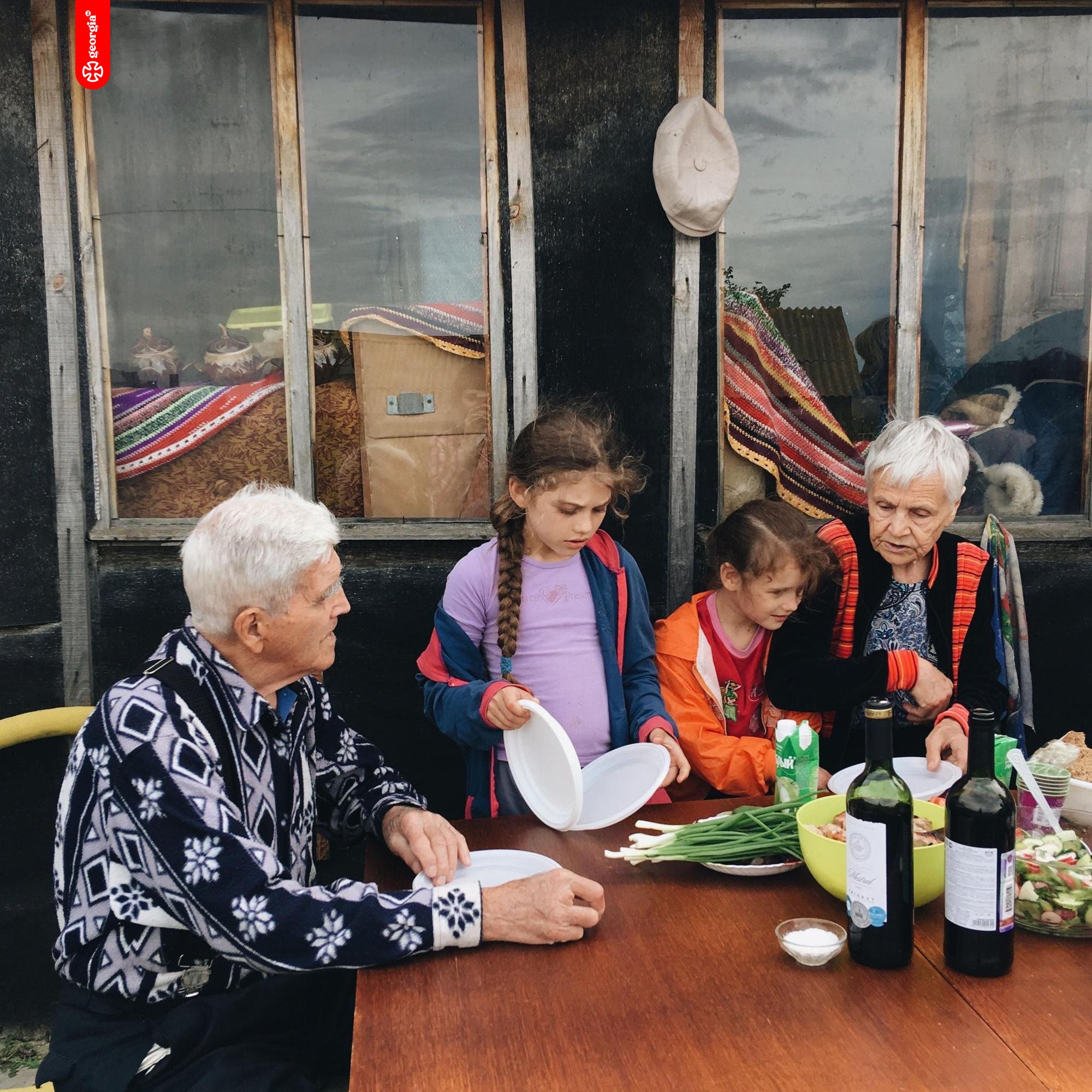
The Never-Ending Georgian Family Tree
A Georgian child was expected to remember every relative they had ever encountered — including people last seen when the child was six months old.
At every birthday, wedding or family gathering, your mother would suddenly guide you toward a completely unfamiliar man.
“Don’t you remember Uncle Giorgi?”
You did not.
“He is Aunt Mariam’s brother.”
This information did not help because you did not remember Aunt Mariam either.
Also, approximately half of Georgia appeared to be named Giorgi, while the other half was somehow related to one.
Still, you smiled politely while your brain searched through every Giorgi it had ever encountered.
Uncle Giorgi would look at you, kiss you enthusiastically and say:
„ეეე, ამხელა მახსოვხარ!“
“Eeeh, I remember you when you were this big!”
He would hold one hand somewhere near his knee to demonstrate your former height.
This was presented as evidence that the two of you shared a meaningful history.
You had no memory of him whatsoever.
He, however, remembered you perfectly — although only as a very small object.
Then came the questions:
“How old are you now?”
“Do you remember coming to our house?”
“Do you remember my children?”
“Do you remember that wedding?”
You did not remember the house, the children or the wedding. You may not yet have been capable of forming long-term memories when these events occurred.
But admitting this felt socially dangerous.
So Georgian children developed an essential survival skill: the respectful, slightly apologetic smile that suggested recognition without legally confirming anything.
And “uncle” or “aunt” did not necessarily clarify the relationship. The person could be your actual uncle, your parent’s cousin, your grandmother’s neighbour, somebody’s godfather, your father’s childhood friend, a man who once helped the family move a wardrobe—or simply an adult whose exact position in the family tree had been lost to history.
It was safer not to ask.
By the end of the celebration, you had been kissed by twelve people, introduced to seven relatives and informed repeatedly that you had grown.
Nobody ever explained what else they had expected you to do.

The Children’s Table Had No Government
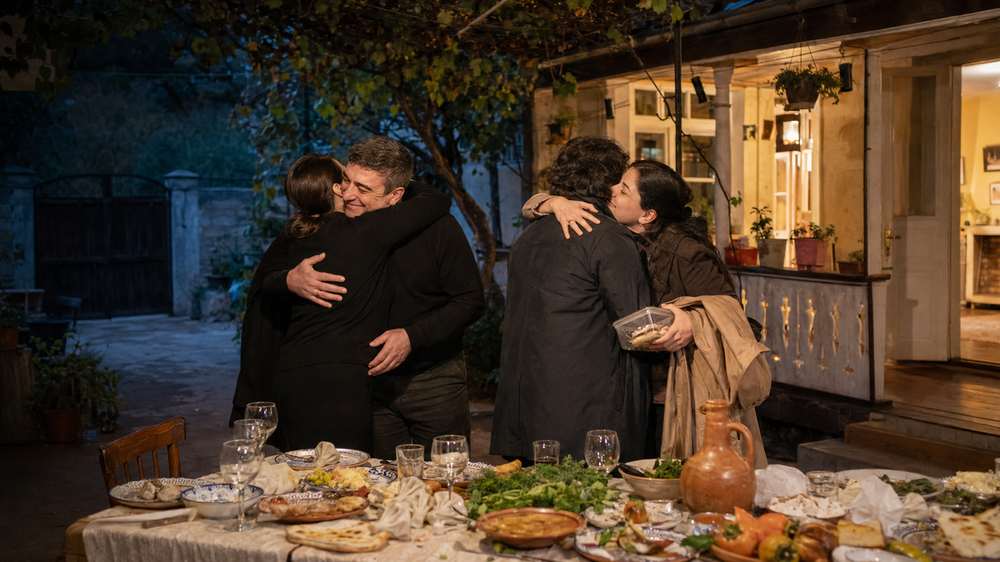
At Georgian weddings and birthdays, children were usually placed at a separate table.
Officially, this was because they needed suitable food and a space of their own.
Unofficially, no adult wanted to supervise them.
The children’s table operated as an independent republic.
It had no recognised leader,
no legal system
and almost unlimited access to Georgian lemonade.
Within twenty minutes, nobody was sitting in the assigned chair.
One child was underneath the table.
Another was collecting empty bottles for reasons known only to them. Someone had disappeared behind the curtains, and at least two children were running between formally dressed guests with a cucumber in one hand and a glass of Tarkhuna lemonade in the other.
The cucumber was never eaten.
It was simply carried around for the rest of the evening.
Of course, the children had arrived on Georgian time.
If an invitation said six o’clock,
arriving at six meant you might meet the restaurant staff while they were still arranging the tables.
Arriving fifteen minutes late meant you were perfectly punctual.
Half an hour could usually be explained.
At a birthday or wedding, an hour was not a delay.
It was an entrance.
Once there, children existed in two conditions simultaneously:
completely unsupervised and aggressively cared for.
Nobody knew where you had been for the previous forty minutes.
But the moment you passed an aunt, she would stop you and ask:
“Have you eaten anything?”
“Yes.”
“What did you eat?”
No Georgian child was ever prepared for this follow-up question.
Meanwhile, the adults continued eating, drinking and dancing as if small people were not conducting military operations beneath their tables.
By the end of the evening, the youngest children were asleep across two chairs, covered with somebody’s jacket. The older ones were still running. Their parents had stopped asking where they were approximately three hours earlier.
And somehow, everyone made it home.

Georgian Medical Science
Georgian childhood came with its own advanced healthcare system.
According to the women raising us, nearly every illness had one of four causes:
You went outside with wet hair.
You refused to wear a jacket.
You sat on something cold.
Or you walked barefoot for approximately seven seconds.
The actual weather was not important.
It could be August.
It could be 34°C.
You still needed to take a jacket because “it will become cold later.”
Later when?
Nobody knew.
But Georgian mothers were preparing for a sudden climate event that had apparently been predicted only to them.
If you sneezed three days later, the case was considered solved:
“I told you to take the jacket.”
There was no appeal.
Fortunately, nearly every childhood illness also had one treatment:
Grandmother’s raspberry muraba.
Muraba is a traditional whole-fruit preserve. It resembles jam, except the fruit remains intact and the quantity of sugar suggests that preservation was planned for several geological eras.
A spoonful was added to hot tea instead of sugar. Sometimes the raspberries floated on top. Sometimes they sank to the bottom. Either way, the drink was considered medically complete.
Sore throat? Raspberry muraba.
Fever? Raspberry muraba.
A cold? More raspberry muraba.
Tiredness, sadness or suspicious silence? Make the child some tea.
Nobody knew the recommended dosage because Georgian grandmothers did not believe in measuring medicinal preserves. The correct amount was always “a little more.”
Whether the muraba actually cured the illness was almost irrelevant. You drank it, sweated beneath several blankets and were forbidden to leave the house until somebody’s grandmother declared you healthy.
If you recovered, the muraba had worked.
If you did not recover, you clearly had not eaten enough of it.
And if the illness became more serious, professional medical help was available — usually after another cup of raspberry tea, just to be safe.

School Taught Us Resilience
Every school year began with perfectly ironed clothes, new stationery and the sincere belief that this year everything would remain organised.
By the end of the first week,
somebody had lost a pen,
somebody was copying homework five minutes before class
and one child had somehow become the official supplier of sunflower seeds.
But nothing created fear quite like a teacher calmly saying:
“I will not tell your parents. You will tell them yourself.”
This was not mercy.
This was psychological warfare.
You spent the entire journey home preparing your speech, reviewing possible sentences and calculating whether it was wiser to confess immediately or wait until your mother was in a good mood.
Your mother was somehow already informed.
The courtyard surveillance system had expanded into education.
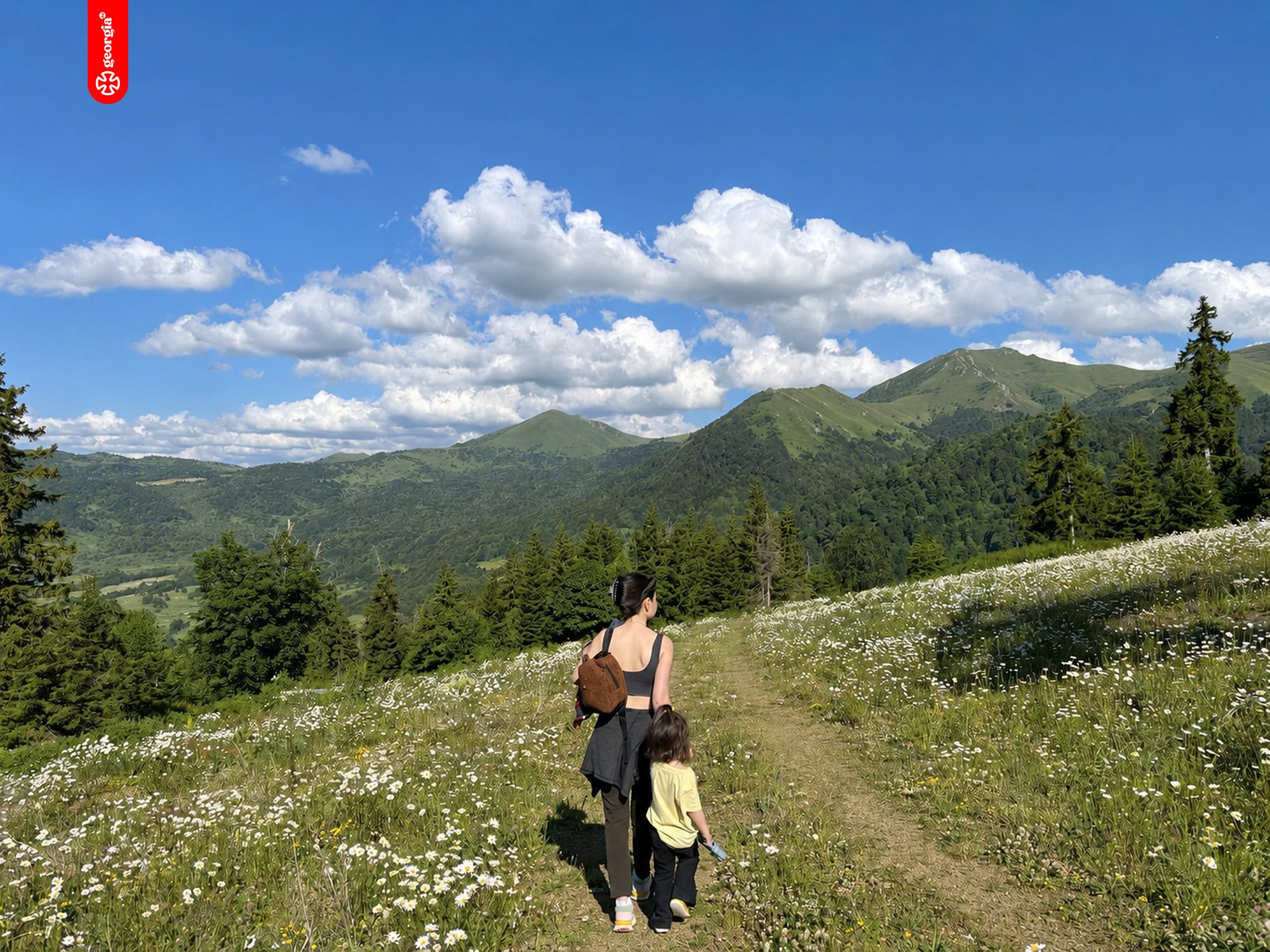
Then You Grow Up
Eventually, the courtyard becomes quieter.
You stop spending summers with scratched knees.
You learn that sitting on something cold does not necessarily destroy your future.
You attend weddings where you are expected to remain at your own table.
You meet a child at a family gathering and remember them as a baby.
Without thinking, you hold one hand near your knee.
„ეეე, ამხელა მახსოვხარ!“
The child smiles awkwardly and looks toward their mother for help.
It has begun.
Then one day, you become a mother yourself.
You are modern.
Educated.
Emotionally aware.
You promise to communicate calmly, respect boundaries and never repeat the irrational warnings inherited from previous generations.
Then your child tries to leave the house with wet hair.
Something ancient wakes inside you.
“Dry your hair.”
“I’m not cold.”
“Take a jacket anyway.”
“I don’t need it.”
“You will need it later.
And there it is.
The voice.
The certainty.
The unquestionable belief that somewhere between home and the playground, winter may arrive without warning.
One day, you call your child inside.
“Come and eat. You can go straight back outside.”
You genuinely intend to keep the promise.
Your mother probably did too.
Perhaps this is how childhood survives in Georgia — not only in village roads, noisy courtyards and voices travelling between balconies, but in the sentences passed from one generation to the next.
The world may be quieter now. Children are easier to locate. Celebrations are better organised. Parenting comes with books, podcasts and professional advice.
But in Georgia, you can still hear children playing outside.
You can still hear a mother calling from a balcony.
You can still see a child running through a wedding with a cucumber they have no intention of eating.
And somewhere, at this very moment, a Georgian mother is saying:
“Come upstairs and eat. You can go straight back outside.”
She may even believe it herself.