















There are rulers history remembers.
And then there are rulers who become larger than history itself.
In Georgia, her name was Tamar.
But she was never called queen.
She was called KING.
Think about that for a moment.
A woman ruling in the 12th century — not quietly, not symbolically, not from behind a throne — but at the height of one of the most powerful periods Georgia had ever known.
And the world around her had no language large enough for what she became.
So instead of diminishing her authority,
they raised the title to meet her.
KING TAMAR

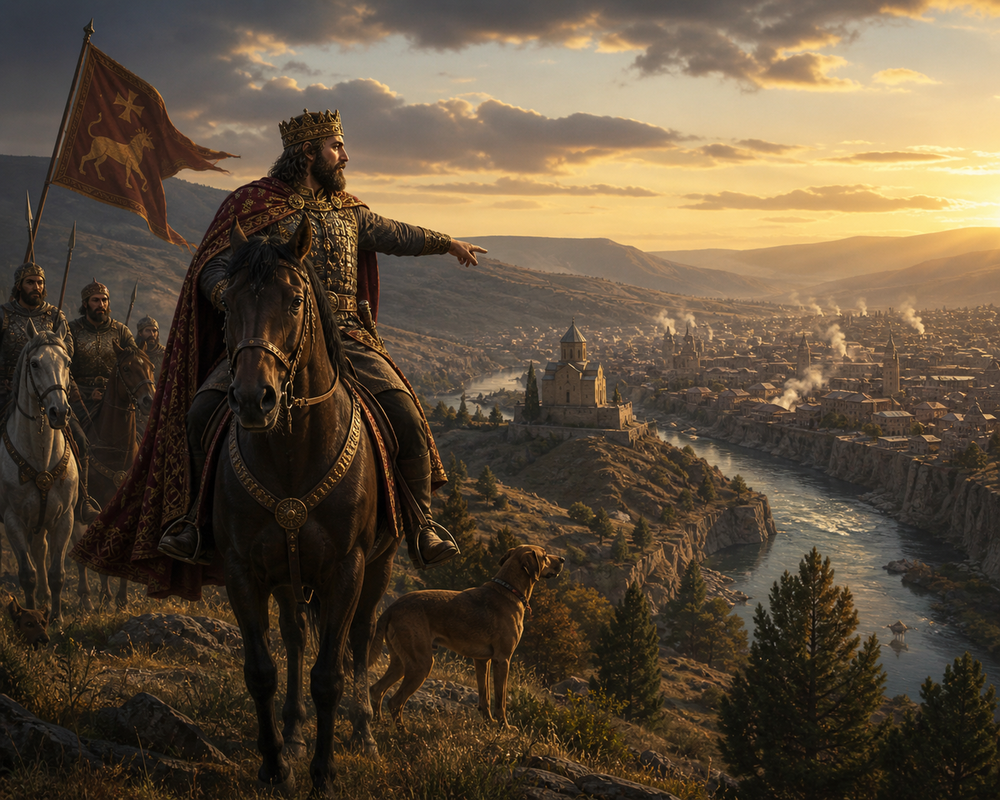
Under her reign, Georgia entered its Golden Age.
The kingdom expanded.
Armies won impossible battles.
Trade flourished across the Caucasus.
Monasteries were carved into cliffs.
Poetry, philosophy, astronomy, architecture — everything seemed to rise at once, as if the country itself understood it was living through something extraordinary.
She was not remembered for softness.
She was remembered for CLARITY.
For INTELIGENCE sharp enough to hold together a kingdom surrounded by empires.
For STRATEGIC DECISIONS that military historians still study centuries later.
For ruling with a kind of CONFIDENCE that made people follow her not because they feared her — but because they believed in her.
And yet, history still tried to do what it often does to powerful women.
Turn them into love stories.
Speak first about beauty.
About marriages.
About emotion before intellect.
But Tamar’s life refused to fit into that shape.
Her first marriage, arranged for politics, ended in betrayal and conflict. She removed her husband from power and continued ruling without hesitation — something almost unimaginable for the time.
Her second marriage, to David Soslan, was remembered differently: not as a king overshadowing a queen, but as a partnership beside someone history already understood was extraordinary.
Because Tamar was never standing next to power.
She was the POWER itself.
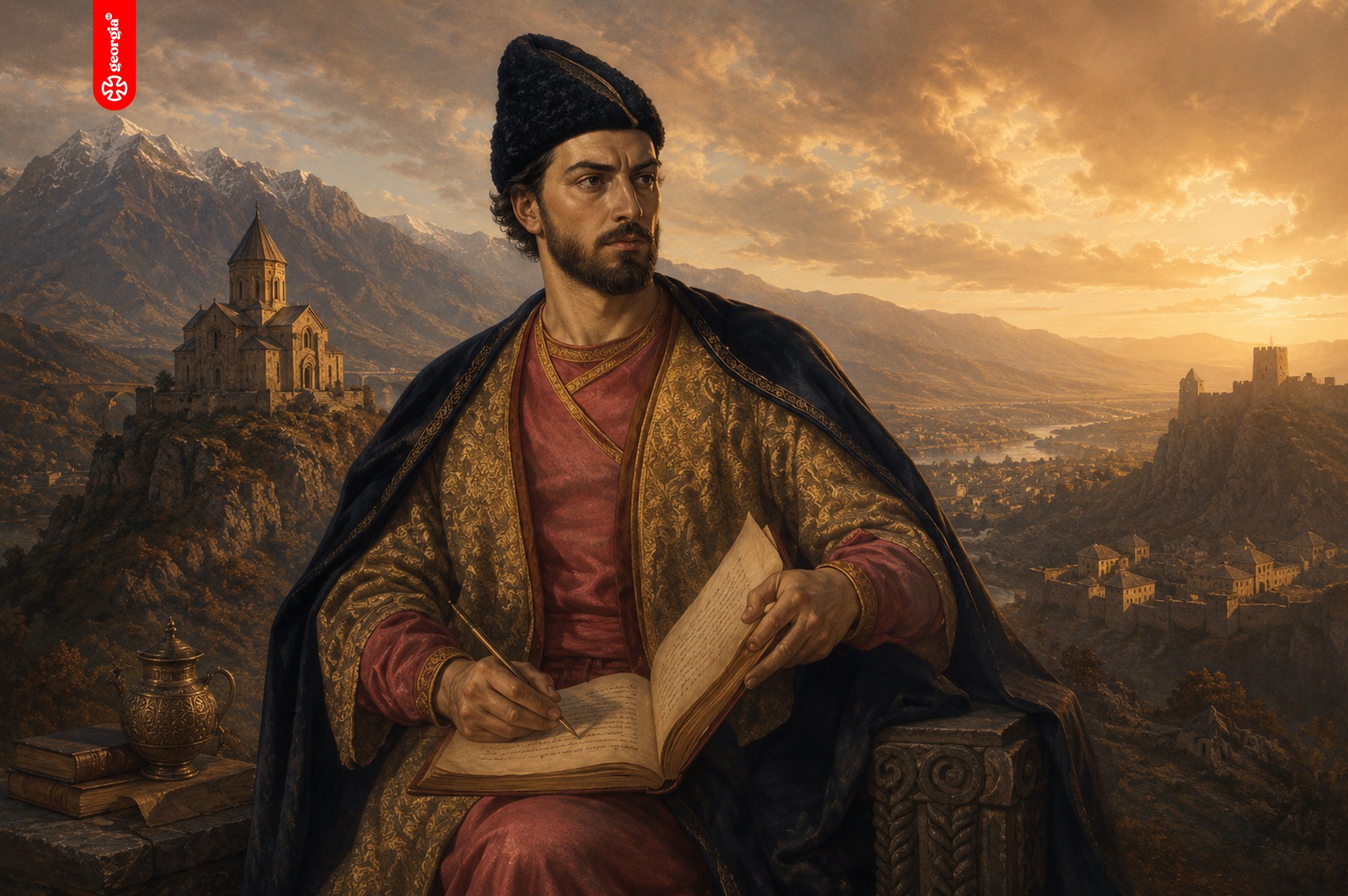
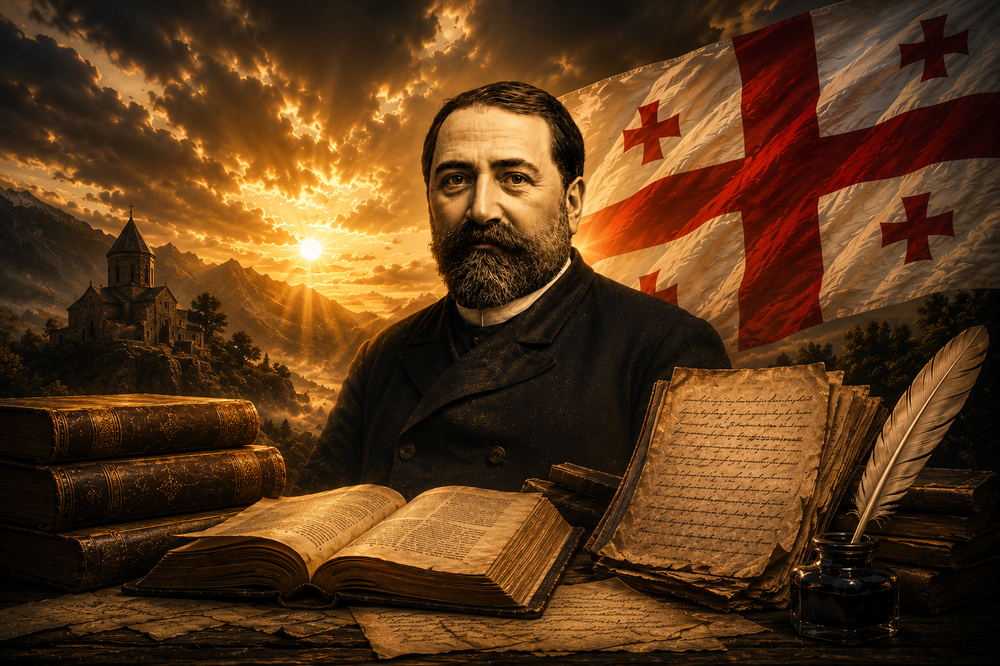
This was also the era of Shota Rustaveli.
And in that era, Georgia’s greatest literary work was born:
The Knight in the Panther’s Skin.
An epic poem written during Tamar’s reign and forever tied to her legacy.
Not a simple love story.
But a work about loyalty, intellect, dignity, friendship, courage and the kind of human greatness that survives centuries.
Perhaps that was the greatest gesture of admiration possible:
not flowers,
not monuments,
but giving an entire civilization its LITERARY SOUL during her reign.
Even now, Tamar does not feel distant in Georgia.
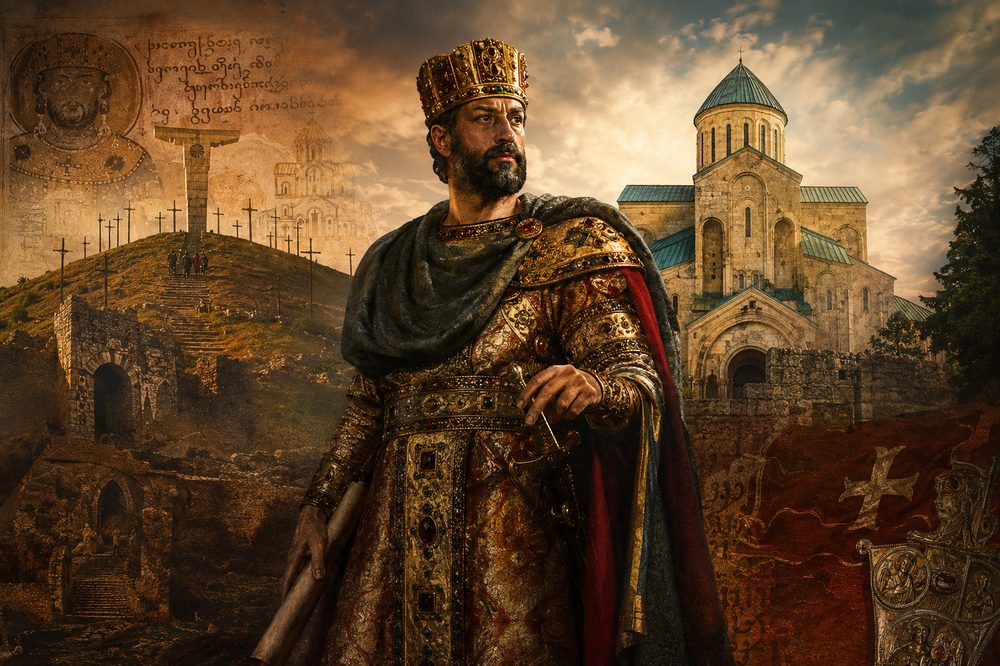
You see her name in monasteries high in the mountains.
In fortress ruins above valleys.
In stories spoken with certainty, not nostalgia.
People here do not speak about her as if she belonged only to the past.
Because somehow, she never entirely left it.