
















Before Facebook, Instagram and neighbourhood WhatsApp groups, Tbilisi had something far more efficient: The Italian Courtyard.
News travelled fast.
Privacy was negotiable.
And somewhere on a second-floor balcony, an elderly neighbour had probably already formed a very strong opinion about your personal life.
Nobody had officially appointed her head of neighbourhood intelligence.
She had simply accepted the responsibility.
Did you have visitors yesterday? She knew.
Did you come home unusually late? She noticed.
Were you planning to get married? Wonderful.
The entire courtyard was probably discussing the wedding before you'd even chosen a date.
Welcome to the Italian courtyards of Tbilisi, where the architecture is beautiful, the neighbours are unavoidable and minding your own business has never been the city's greatest talent.
But behind the gossip, the laundry hanging between balconies and the occasional disagreement conducted at a volume that could reach the next street, there is a fascinating story.
And, surprisingly enough, it has very little to do with Italy.
First of All, Why Are They Called Italian?
A perfectly reasonable question.
After all, we're in Tbilisi, the capital of Georgia.
The houses are Georgian,
the residents are Georgian (or members of the many other communities that historically called Tbilisi home),
and the chances of finding an actual Italian connection are rather slim.
So where did Italy come from?
The explanation most often associated with these courtyards takes us back to the Soviet period, when Italian neorealist cinema was widely admired.
Those films often showed ordinary people living closely together,
talking across balconies,
arguing in public
and generally participating in each other's lives with remarkable enthusiasm.
To Tbilisi residents, the atmosphere felt familiar.
After all, why travel to Italy to experience a lively Mediterranean neighbourhood when you could simply step outside your apartment?
The nickname caught on, although its exact origin remains uncertain. Some explanations also point to the courtyards' resemblance to Mediterranean communal living.
The funny part is that the courtyards themselves existed long before anyone thought to call them Italian.
And their story begins with a very different Tbilisi.
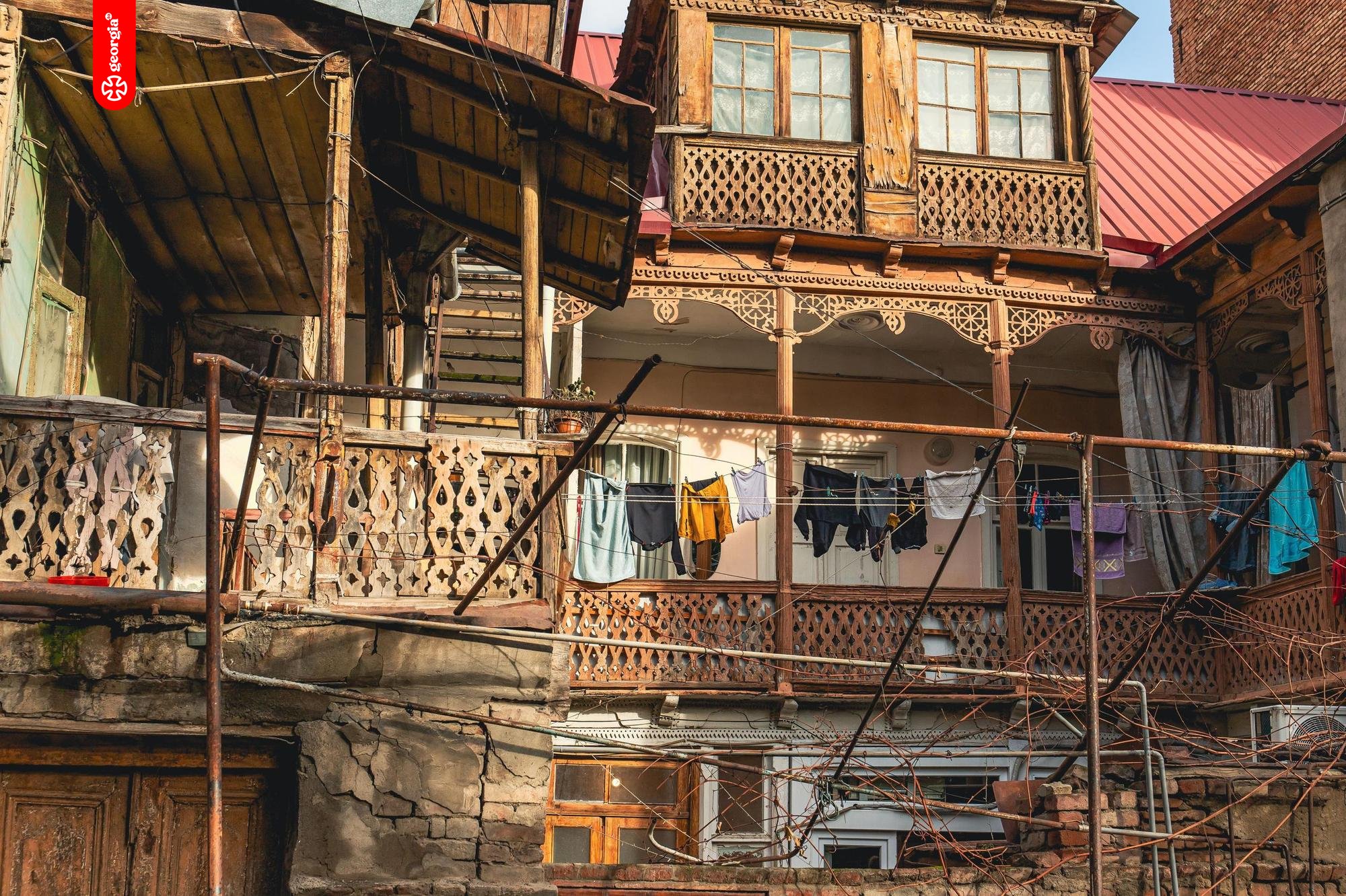
Behind the Beautiful Facades, a Completely Different World
During the nineteenth and early twentieth centuries, Tbilisi was becoming an increasingly prosperous and cosmopolitan city.
Merchants, industrialists and wealthy families built impressive residences in neighbourhoods such as Sololaki.
From the street, these buildings presented themselves as respectable members of European society.
Elegant facades.
Decorative stonework.
Beautiful entrance halls.
Occasionally, an architectural flourish designed to make the neighbours just a little jealous.
But walk through the entrance and the personality of the building could change completely.
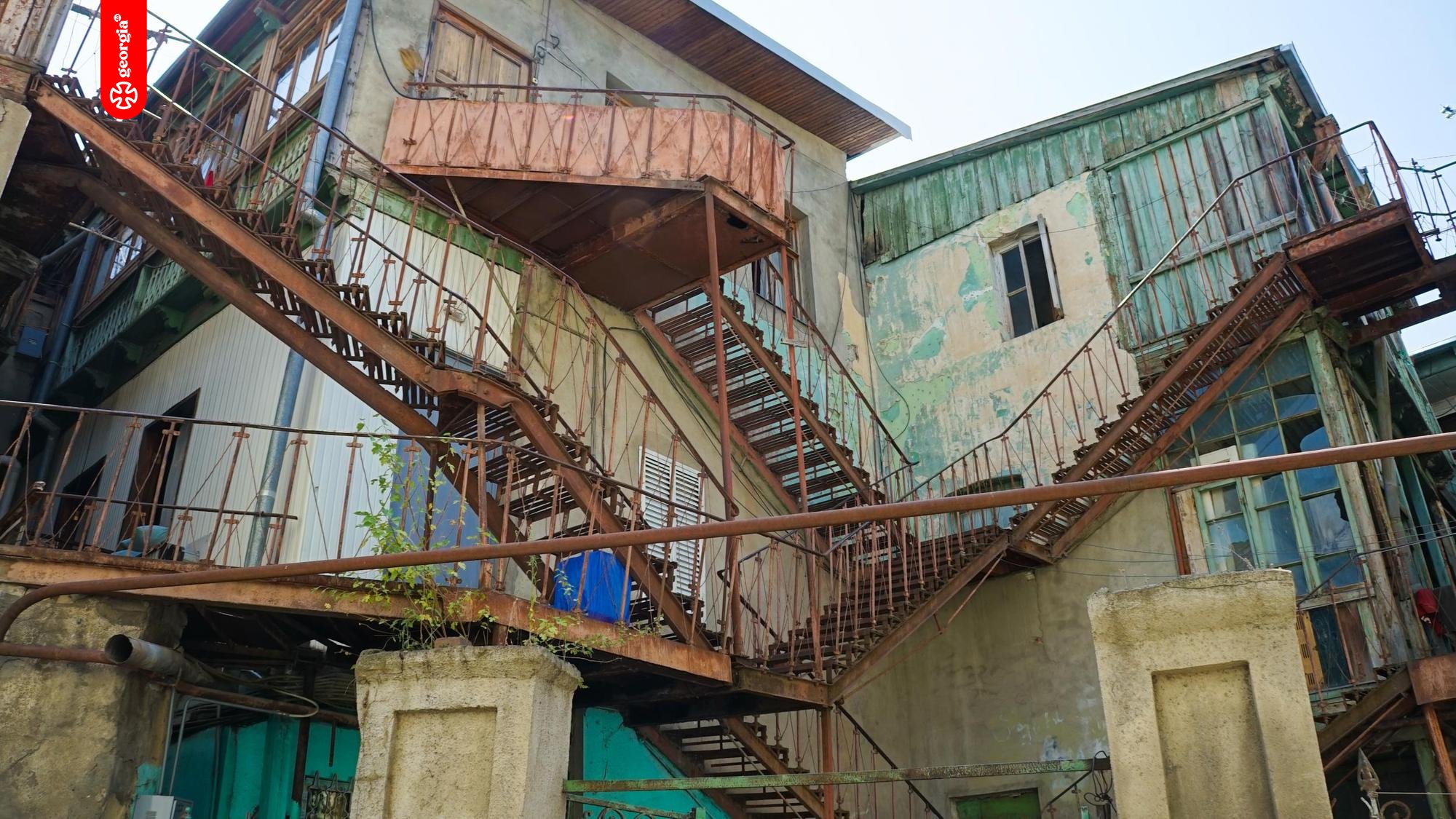
Behind those formal facades were open courtyards surrounded by wooden balconies, covered galleries, external staircases and beautifully carved railings.
Instead of facing only the street, much of everyday life turned inward, towards the courtyard.
The result was something distinctly Tbilisian:
European-inspired architecture on the outside and a more intimate Caucasian approach to domestic life on the inside.
And then history intervened.
Following the Soviet takeover of Georgia in 1921, the ownership and use of many large residences changed dramatically.
Homes originally built for wealthy families were subdivided into smaller apartments. Multiple households found themselves sharing buildings that had never been designed for quite so many people.
Additional staircases appeared.
Balconies became passageways.
Rooms were rearranged.
Shared facilities and limited living space became part of everyday reality.
An elegant private residence might now accommodate several families, each with different habits, personalities and opinions about precisely how the courtyard should be managed.
If you've ever struggled to agree with one neighbour about a shared staircase, imagine negotiating life with an entire building.
Yet out of these circumstances emerged one of Tbilisi's most recognisable forms of communal living.
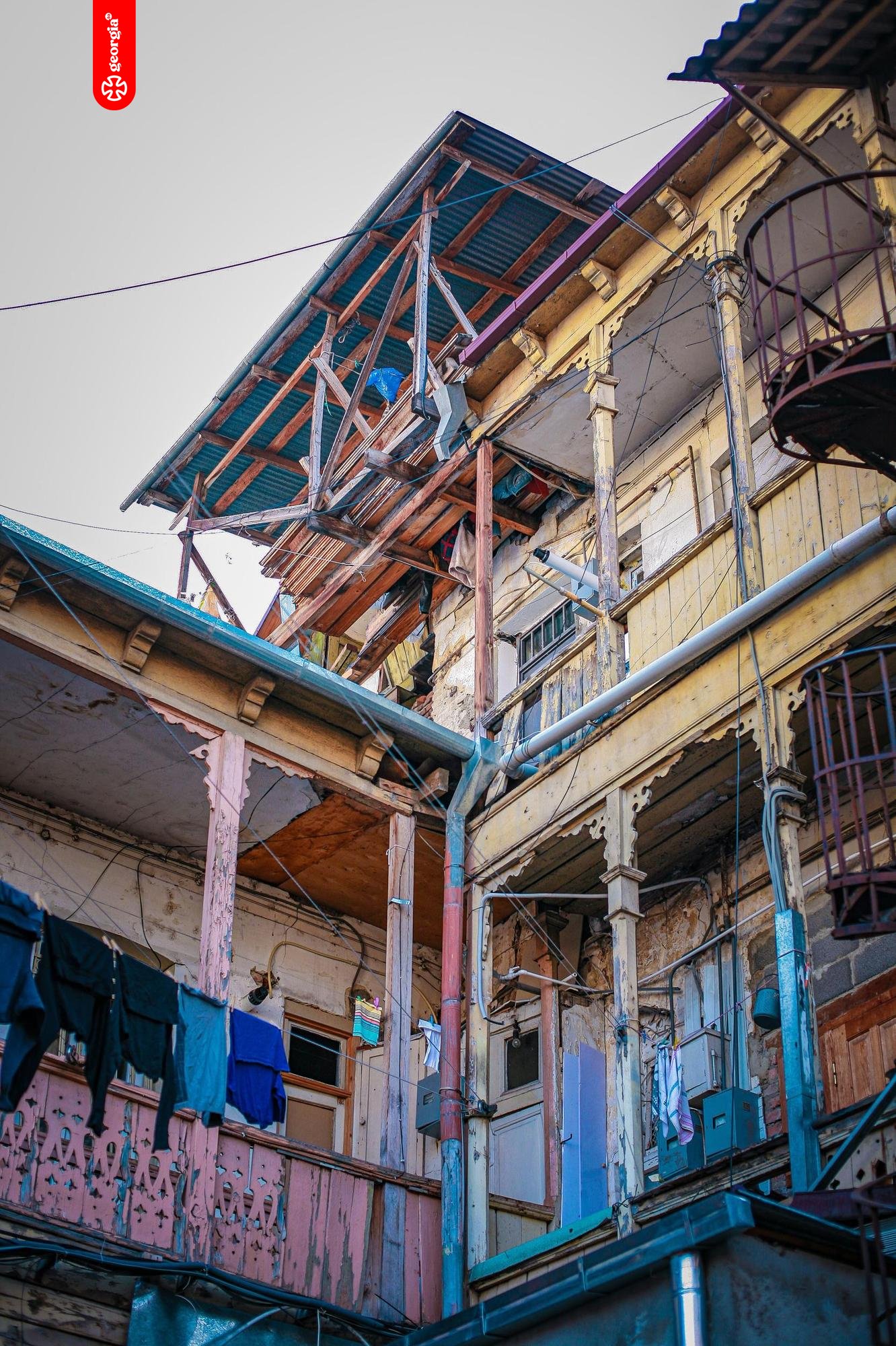
The Courtyard Had Its Own Social Network
To understand an Italian courtyard, you need to understand one important thing.
It wasn't merely the space between several apartments.
It was where much of life happened.
Children played below the balconies,
neighbours gathered for conversations,
laundry dried overhead
and news moved effortlessly from one household to the next.
A woman preparing dinner could exchange a few words with someone upstairs.
A neighbour returning from the market might stop for a conversation that lasted considerably longer than the journey itself.
And, naturally, absolutely everyone had an opinion.
This was a place where you could leave your apartment intending to buy bread and return forty minutes later with the bread, three pieces of neighbourhood news and unsolicited advice about your career.
Of course, not every courtyard was an uninterrupted celebration of neighbourly affection.
People argued.
Boundaries were crossed.
Living conditions could be difficult.
Sharing space with several families wasn't always charming, especially when privacy, comfort, and resources were limited.
But these courtyards also created relationships that could last for generations.
The same neighbours who argued about everyday matters might be the first to appear when someone needed help.
There was a kind of unwritten agreement.
Your business was occasionally everyone's business.
But so were your troubles.
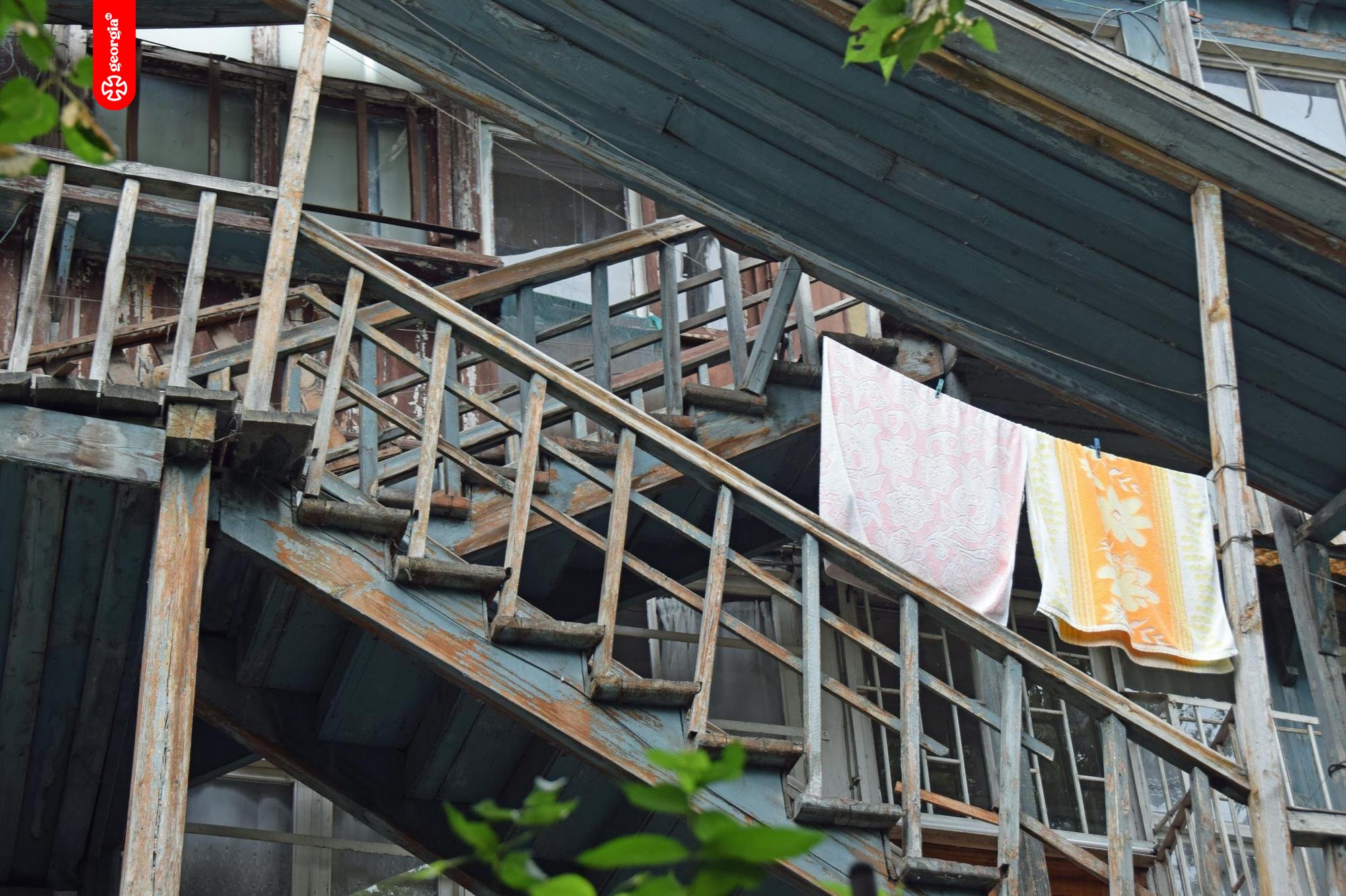
When One Family Celebrated, the Whole Courtyard Heard About It
There is something wonderfully theatrical about the way people remember life in old Tbilisi's courtyards.
Imagine a wedding.
In a modern apartment building, you might receive a polite notice asking residents to excuse some additional noise.
In a traditional Tbilisi courtyard, the neighbours were often part of the celebration itself.
Tables could be brought outside.
Food was prepared.
Music filled the shared space.
Relatives arrived.
Conversations grew louder.
And the courtyard briefly became a celebration hall.
You didn't necessarily have to ask whether there was a wedding.
You could hear the answer.
And the same communal spirit often appeared during more difficult moments.
If someone fell ill, neighbours could help with meals, errands, or looking after children. When a family experienced a loss, others shared the responsibilities and the grief.
Not because everyone was always particularly close.
And certainly not because everyone always got along.
But because living together had created a sense of responsibility that extended beyond one's own front door.
It wasn't a perfect system.
It was simply human.
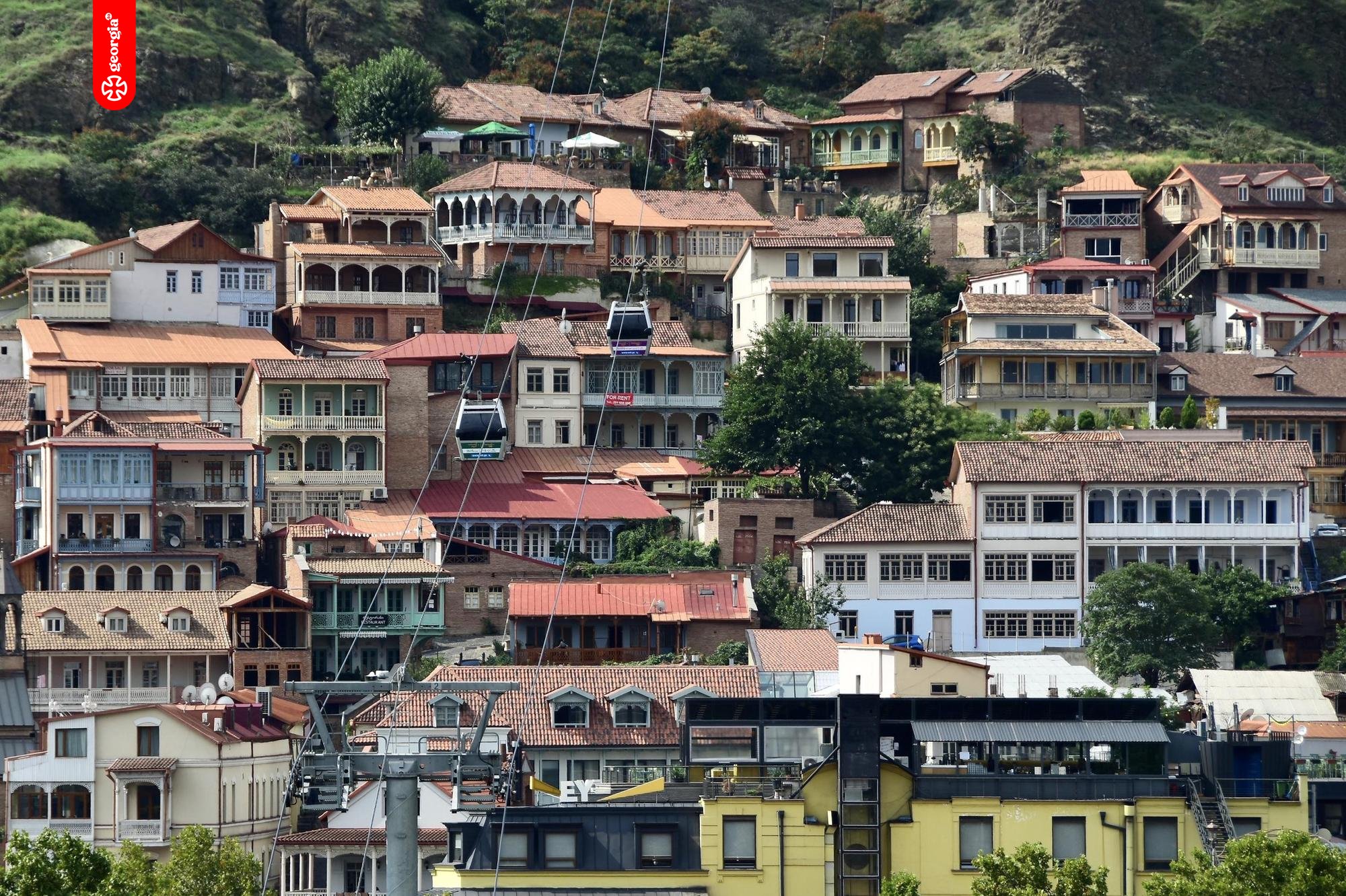
A City That Kept Its Stories on the Balconies
If you walk through Sololaki, Chugureti, or parts of Old Tbilisi today, you can still find buildings that carry the marks of this history.
Look closely and you might notice the elaborate wooden balconies, winding metal staircases, old doors, and delicate decorative details that somehow survived decades of political upheaval and urban change.
Some courtyards are beautifully restored.
Others are not.
Peeling paint,
ageing timber,
exposed pipes
and improvised extensions reveal the less romantic side of the buildings' long lives.
But that's part of what makes them interesting.
These are not architectural exhibits designed to show visitors what nineteenth-century Tbilisi once looked like.
They are places where real people have lived and often continue to live.
Each generation has changed something.
A staircase was added.
A balcony was enclosed.
A doorway moved.
A small garden appeared where there had once been something else.
The buildings have adapted, sometimes elegantly, sometimes rather less so.
And all those changes have become part of the story.
The temptation, naturally, is to photograph everything.
The balconies.
The staircases.
The laundry.
The cat looking at you from the windowsill as though you're the least interesting tourist it has encountered all week.
But there is something worth remembering.
What looks like an irresistibly picturesque courtyard to a visitor may be somebody's ordinary Tuesday.
So admire the architecture, but respect the people living there.
An open gate is not necessarily an invitation to wander through someone's home.
And if a resident does invite you inside, well, that is a different story.
Just don't be surprised if the conversation lasts longer than expected.
You're in Georgia, after all.
Come and Meet the Tbilisi Behind the Facades
There are plenty of reasons to visit Tbilisi.
The ancient churches,
the sulfur baths,
the winding streets,
the wine
and the food alone could keep you happily occupied for days.
But we believe some of the city's most interesting stories are the ones you might otherwise walk straight past.
At Georgia.to we love introducing visitors to the details that make a place feel genuinely alive: The architecture, People, The little contradictions
And the history hiding in plain sight.
And one final piece of advice.
If you find yourself wandering into one of Tbilisi's Italian courtyards, don't be surprised if someone greets you from a balcony, asks where you're from, or strikes up a conversation as though you've known each other for years.
Georgians are famously welcoming and some residents may be delighted to share a story or two about the place they call home. Just remember that these beautiful courtyards are still people's homes, so a little courtesy goes a long way.
And if someone invites you in for coffee, you might want to reconsider your afternoon plans.
Because in Georgia, a five-minute conversation has a remarkable talent for becoming a two-hour visit.
And somehow, you'll leave feeling like you've just visited family.