















When a Georgian bride left her family home, part of that home often went with her.
Clothing and jewellery.
Carefully prepared textiles.
The things she would need in another household, gathered according to what her family could afford.
And sometimes, among those possessions, a book of poetry.
This was მზითვი — MZITVI(嫁妆), the Georgian dowry.
Its preparation could involve years of work, family decisions and hopes for a daughter’s future.
What went with her tells us a great deal about Georgia: how families understood marriage, what a woman could call her own and why literature could deserve a place beside life’s practical necessities.
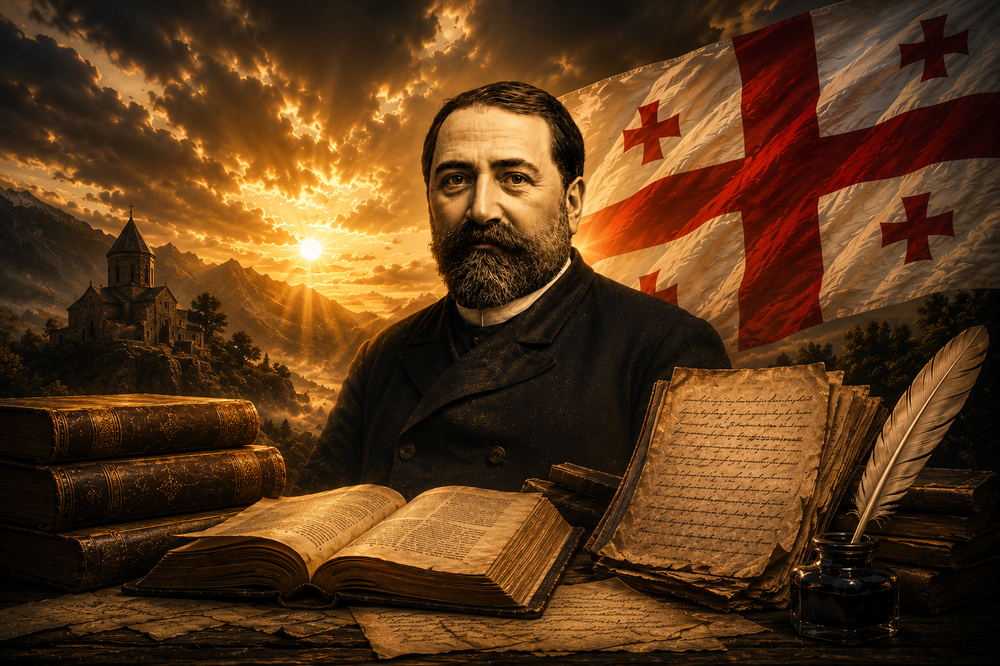
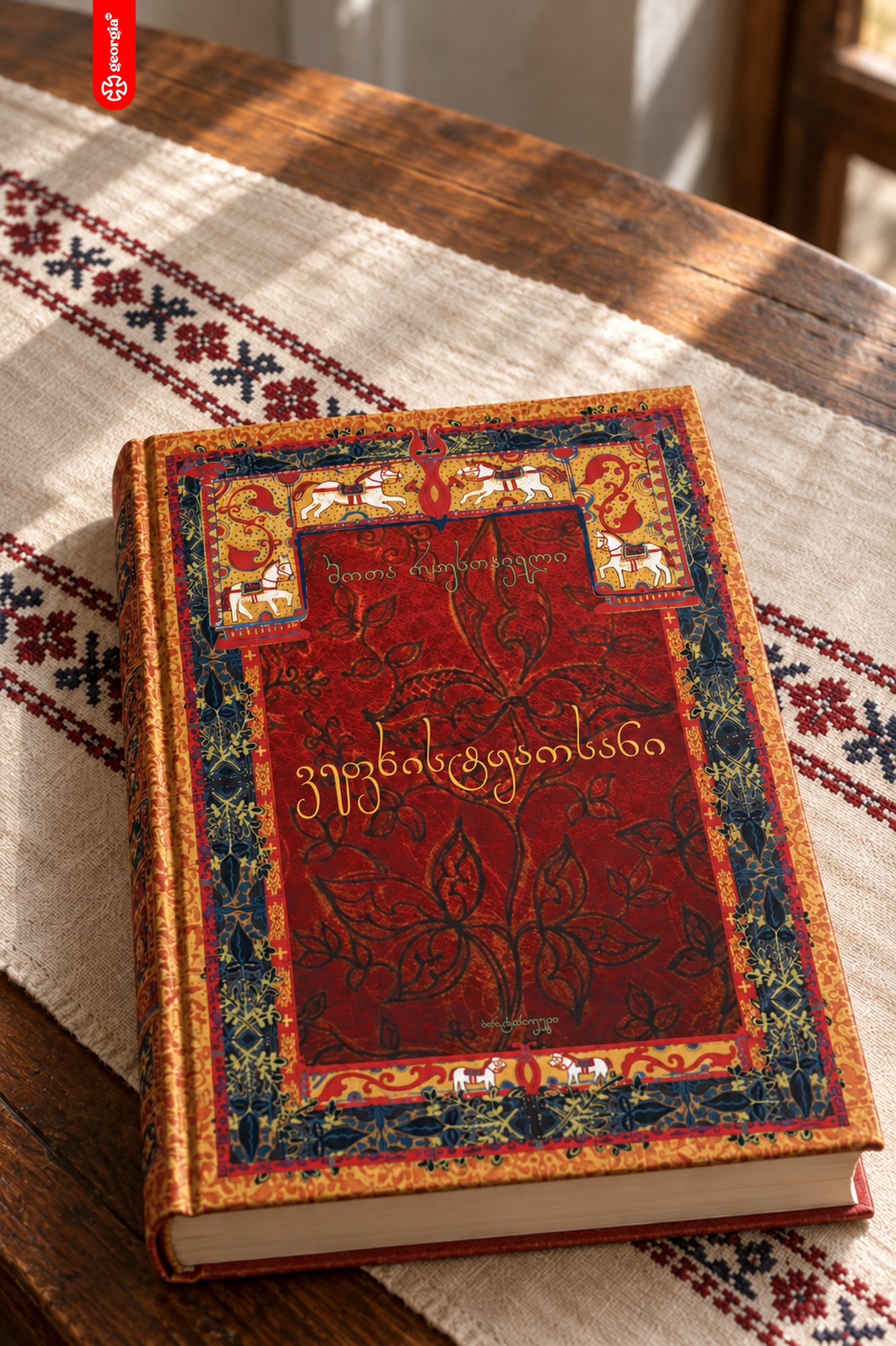
Because among the books included in Georgian dowries was 《豹皮上的骑士》。
A family preparing its daughter for a new life had found room for 鲁斯塔韦利。
The wedding might still be years away when the work began.
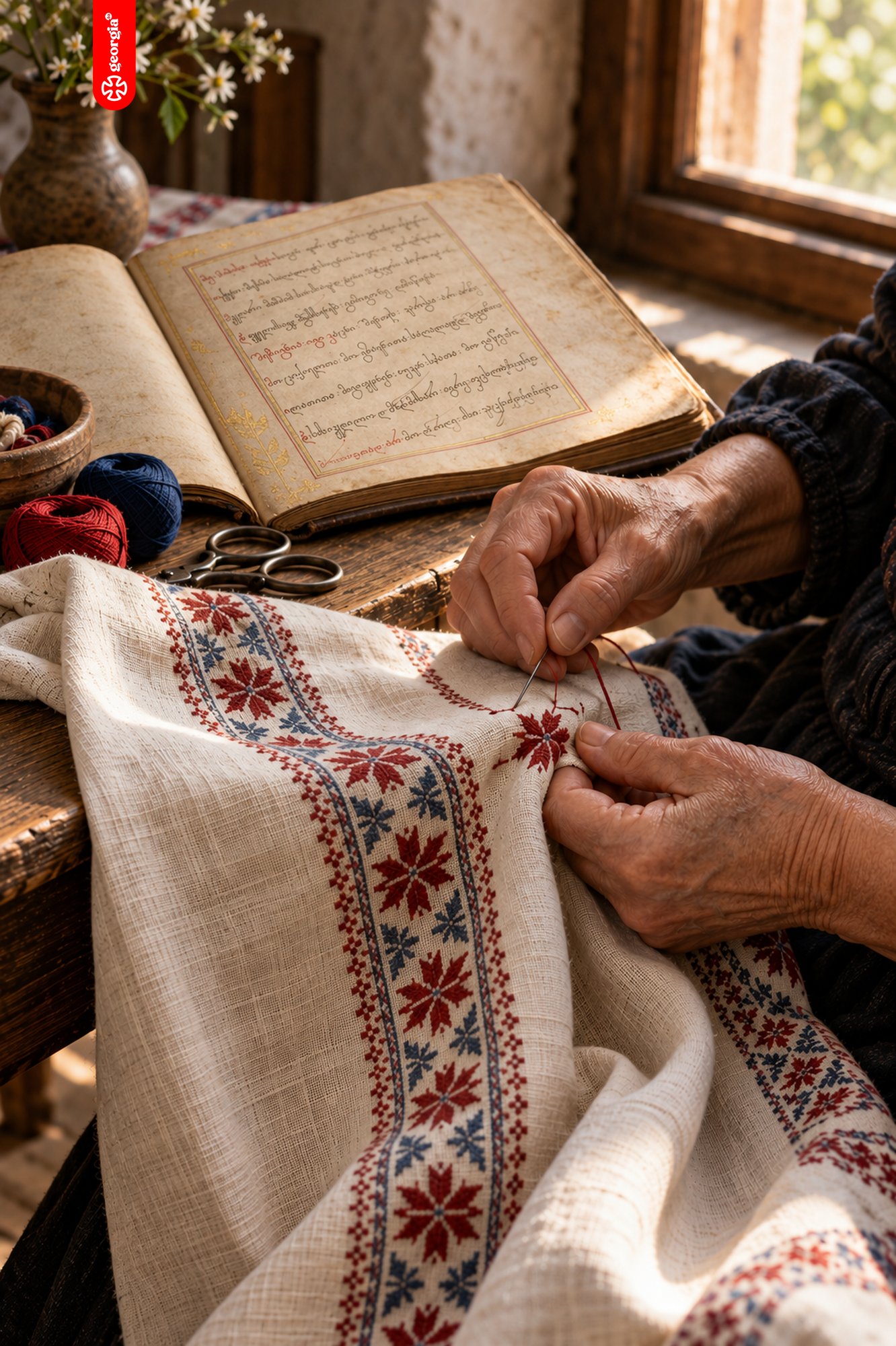
In parts of Georgia’s eastern highlands, girls helped prepare their own dowries from childhood, learning to spin, weave and embroider.
A finished textile could hold years of practice.
A technique learned from someone older.
Hours of work that would eventually leave the house with the person who made it.
By the time a bride married, some of her belongings already had a history.
The contents varied enormously.
One family provided clothing, bedding and cooking utensils.
Another could add jewellery, money, livestock or land.
There was no single Georgian dowry, just as there was no single way of living across the country’s mountains, villages and towns.
And some families kept a very careful record.
“嫁妆簿”。
Aristocratic households drew up detailed inventories of what would accompany the bride. Several survive, including one belonging to 安努卡公主。
Imagine reading one today.
You begin with a list of possessions and gradually see the outline of a household: what it valued, what it could afford and what it expected a daughter to need.
In old Tbilisi, the neighbours sometimes had a preview. Dowries could be transported publicly through the streets by specially hired carriers.
A family’s preparations were, quite literally, on display.
There was a reason to remember exactly what a bride brought.
那些财物被确认为她的。
In an extended household, where several generations lived together and much of the property belonged to the family collectively, that distinction mattered.
მზითვი — MZITVI(嫁妆) could provide a woman with a recognised share of her family’s wealth. It also belonged to a world where women’s access to land and inheritance was often more restricted than men’s and where a family could feel pressure to provide an impressive dowry.
Affection and obligation could be packed together.
But among all those practical and social considerations, the books remain a remarkable detail.
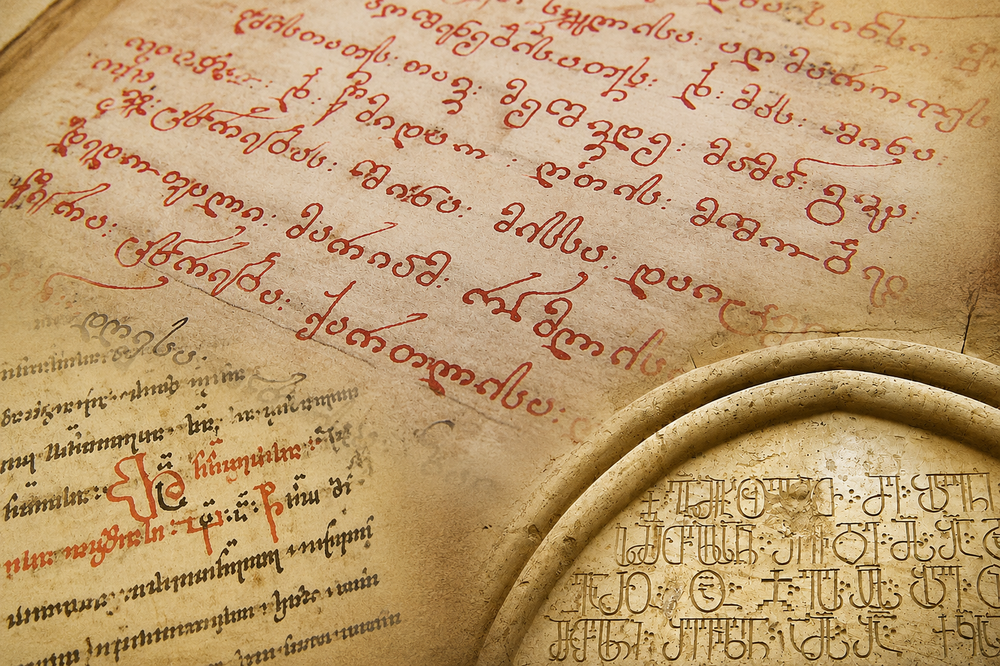
Georgian accounts record religious works, dictionaries, poetry and even grammar among the books given to brides. The custom varied between households, but The Knight in the Panther’s Skin has a particularly memorable place in it.
Think of the decision behind that.
A family choosing what its daughter should take into another home included literature among the things worth keeping close.
她的未来有阅读的空间。
她熟悉的文字。
有一天她也许会传承的东西。
The story did not end with handwritten manuscripts.
By the twentieth century, a Georgian dowry could include furniture, household linen, a piano or even a car.
Books could make the journey too: a personal library or a treasured golden edition of The Knight in the Panther’s Skin, finding its place on the shelves of a new home.
Families approached this differently. Some spent years preparing what a daughter would take into marriage. Others placed greater value on the possessions a couple would gradually acquire together.
The first furniture they chose…
The books they collected…
The home they made their own….
მზითვი — MZITVI(嫁妆)是格鲁吉亚家庭生活的一部分,但并非每个格鲁吉亚家庭的故事。
When you travel through Georgia, keep a little curiosity for the ordinary objects.
An embroidered cloth.An old piece of jewellery.A book carefully kept long after its pages began to wear.
Ask how it came into the family.
The answer may take you through a marriage, a move or a grandmother whose belongings are still being used.
Someone made those things, saved for them or decided to part with them.
Someone carried them into an unfamiliar home.
And somewhere among the practical preparations for a daughter’s future…
一个家庭为诗歌腾出空间。
格鲁吉亚有许多这样的故事。我们很乐意通过它的地方、它的人们以及他们选择保留的物品,帮助你去发现这些故事。