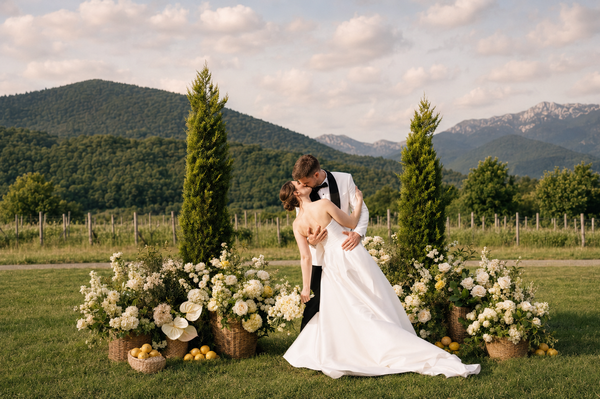
















When a Georgian bride left her family home, part of that home often went with her.
Clothing and jewellery.
Carefully prepared textiles.
The things she would need in another household, gathered according to what her family could afford.
And sometimes, among those possessions, a book of poetry.
Das war მზითვი — MZITVI, die georgische Mitgift.
Die Vorbereitung konnte Jahre harter Arbeit, familiäre Entscheidungen und Hoffnungen für die Zukunft einer Tochter umfassen.
Was sie mitnahm, verrät viel über Georgien: wie Familien Ehe verstanden, was eine Frau ihr eigenes nennen konnte und warum Literatur neben den praktischen Notwendigkeiten des Lebens ihren Platz verdienen konnte.
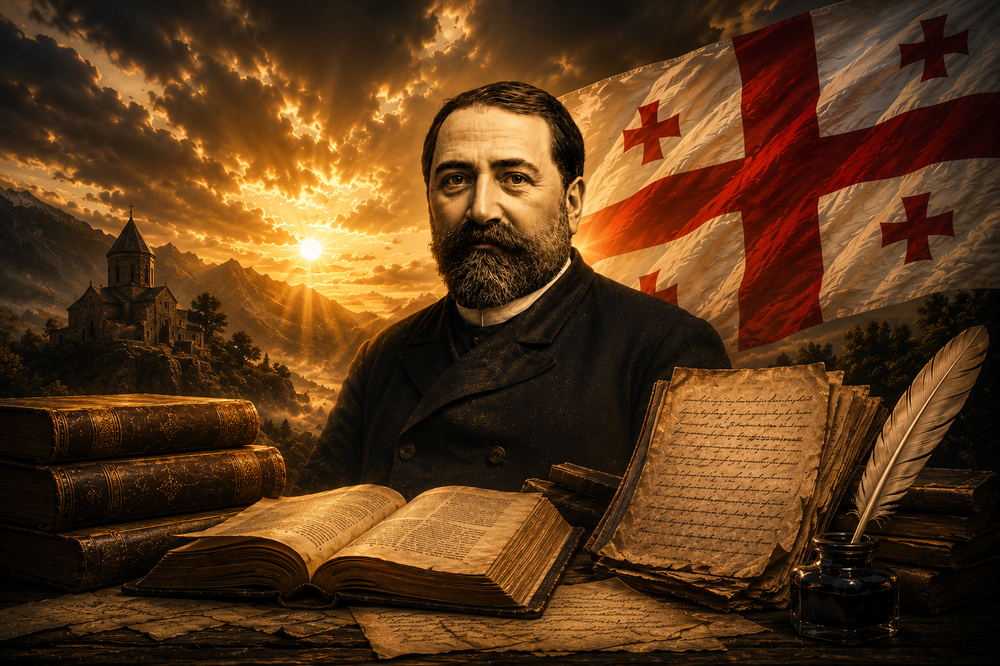
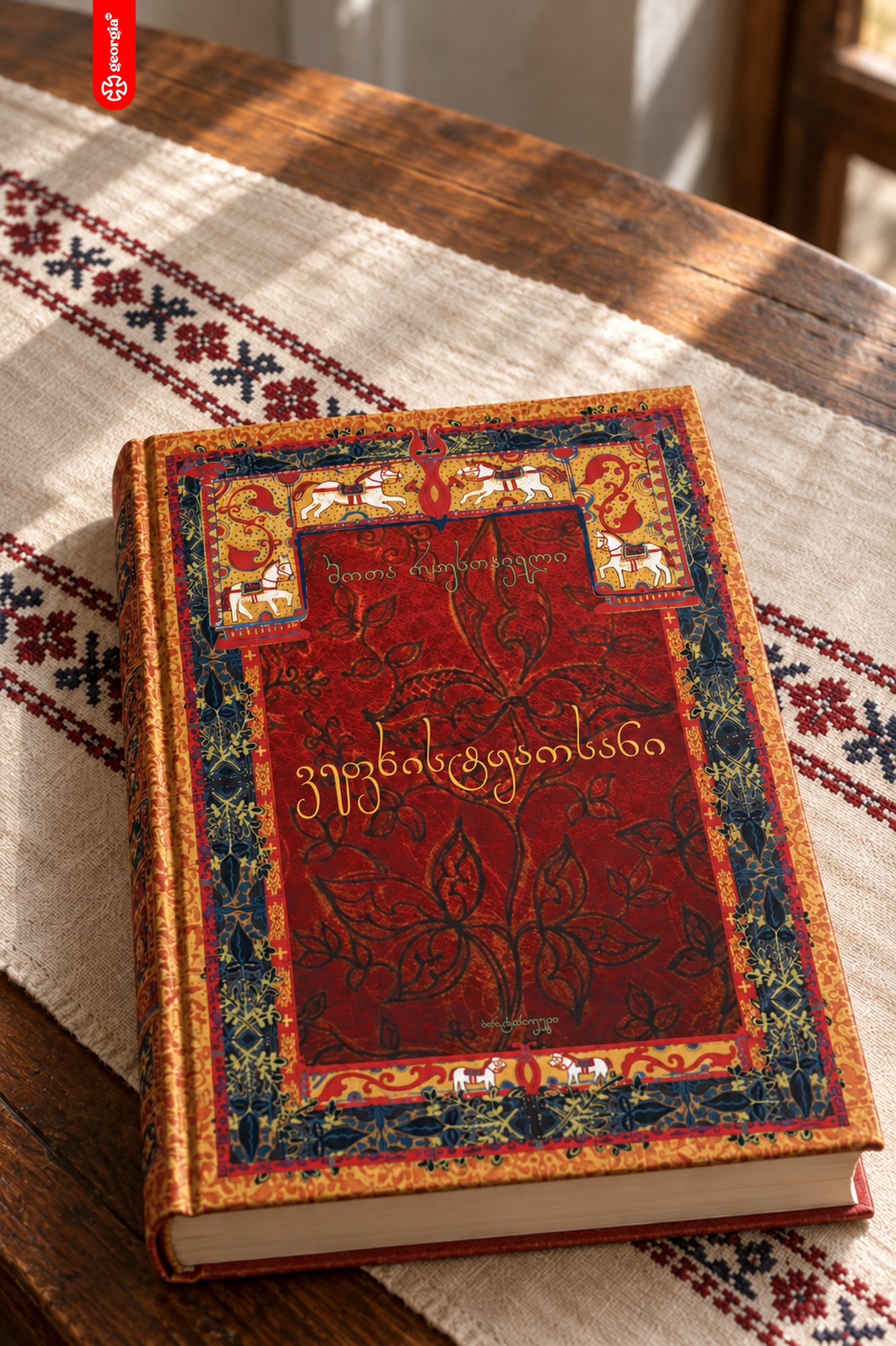
Denn unter den Büchern, die in georgischen Mitgiften zu finden waren, war Der Ritter im Pantherfell.
Eine Familie, die ihre Tochter auf ein neues Leben vorbereitete, hatte Platz für Rustaveli.
The wedding might still be years away when the work began.
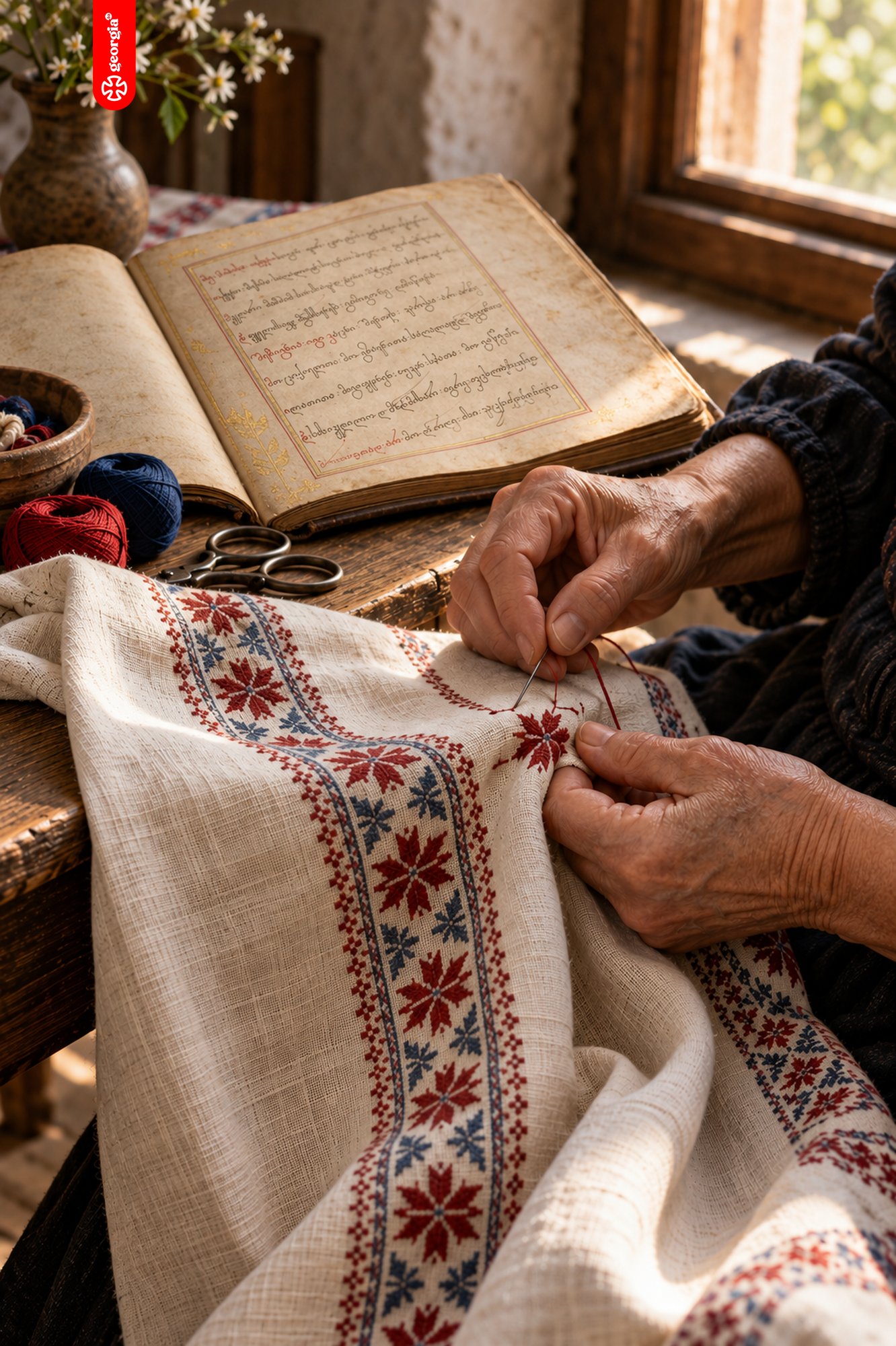
In parts of Georgia’s eastern highlands, girls helped prepare their own dowries from childhood, learning to spin, weave and embroider.
A finished textile could hold years of practice.
A technique learned from someone older.
Hours of work that would eventually leave the house with the person who made it.
By the time a bride married, some of her belongings already had a history.
The contents varied enormously.
One family provided clothing, bedding and cooking utensils.
Another could add jewellery, money, livestock or land.
There was no single Georgian dowry, just as there was no single way of living across the country’s mountains, villages and towns.
And some families kept a very careful record.
Ein „Mitgiftbuch.“
Aristocratic households drew up detailed inventories of what would accompany the bride. Several survive, including one belonging to Prinzessin Anuka.
Imagine reading one today.
You begin with a list of possessions and gradually see the outline of a household: what it valued, what it could afford and what it expected a daughter to need.
In old Tbilisi, the neighbours sometimes had a preview. Dowries could be transported publicly through the streets by specially hired carriers.
A family’s preparations were, quite literally, on display.
There was a reason to remember exactly what a bride brought.
These belongings were recognised as hers.
In an extended household, where several generations lived together and much of the property belonged to the family collectively, that distinction mattered.
Mzitvi konnte einer Frau einen anerkannten Anteil am Familienvermögen verschaffen. Es gehörte auch zu einer Welt, in der der Zugang von Frauen zu Land und Erbschaften oft stärker eingeschränkt war als der von Männern und in der eine Familie Druck verspüren konnte, eine beeindruckende Mitgift zu stellen.
Affection and obligation could be packed together.
But among all those practical and social considerations, the books remain a remarkable detail.
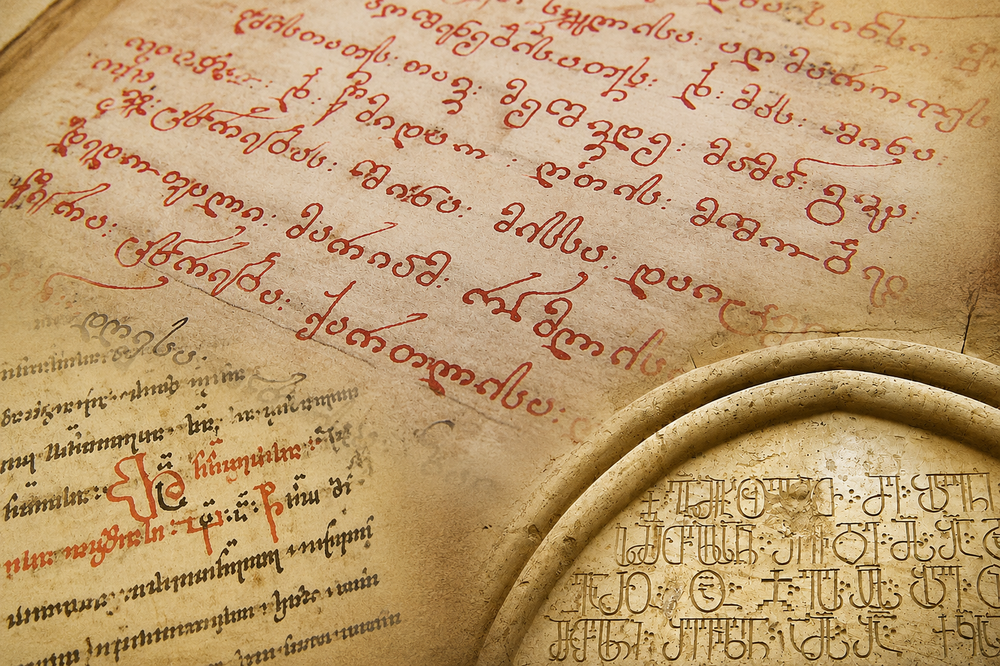
Georgian accounts record religious works, dictionaries, poetry and even grammar among the books given to brides. The custom varied between households, but The Knight in the Panther’s Skin has a particularly memorable place in it.
Think of the decision behind that.
A family choosing what its daughter should take into another home included literature among the things worth keeping close.
Ihre Zukunft hatte Raum zum Lesen.
Für die Worte, die sie kannte.
Für etwas, das sie eines Tages selbst weitergeben könnte.
The story did not end with handwritten manuscripts.
By the twentieth century, a Georgian dowry could include furniture, household linen, a piano or even a car.
Books could make the journey too: a personal library or a treasured golden edition of The Knight in the Panther’s Skin, finding its place on the shelves of a new home.
Families approached this differently. Some spent years preparing what a daughter would take into marriage. Others placed greater value on the possessions a couple would gradually acquire together.
The first furniture they chose…
The books they collected…
The home they made their own….
Mzitvi was part of Georgian family life, but it was never the story of every Georgian family.
When you travel through Georgia, keep a little curiosity for the ordinary objects.
An embroidered cloth.An old piece of jewellery.A book carefully kept long after its pages began to wear.
Ask how it came into the family.
The answer may take you through a marriage, a move or a grandmother whose belongings are still being used.
Someone made those things, saved for them or decided to part with them.
Someone carried them into an unfamiliar home.
And somewhere among the practical preparations for a daughter’s future…
A family made room for poetry.
Georgia has many stories like this. We would love to help you discover them through its places, its people and the things they have chosen to keep.