















Imagine trying to understand a language without knowing a single word.
A language where weddings have their own bread.
Children have their own bread.
Saints have their own bread.
The dead have their own bread.
Even fate has its own bread.
Strange?
It becomes even stranger when you learn that all of this happened in one country.
GEORGIA.
Most people know Georgia as the birthplace of wine.
Some discover its mountains.
Others fall in love with its churches, polyphonic singing or unique alphabet.
But hidden among all of these stories is another one.
A quieter story.
One that has been baked for thousands of years.
Because in Georgia, bread was never simply food.
It was MEMORY.
It was PRAYER.
It was HOPE.
It was PROTECTION.
It was A WAY OF SPEAKING WITHOUT WORDS.
The more you learn about Georgian bread traditions, the less you think about baking.
And the more you think about LANGUAGE.
Because language works through meaning.
Different words for different moments.
Different symbols for different ideas.
And for centuries, Georgians did something remarkable.
They created different breads for different parts of life.
A bread for A WEDDING.
A bread for HEALING.
A bread for HARVEST.
A bread for THE NEW YEAR.
A bread for THE HOUSEHOLD.
A bread for TRAVELERS.
A bread for SAINTS.
A bread for ANCESTORS.
A bread for REMEMBRANCE.
A bread for GOOD FORTUNE.
A bread for FERTILITY.
Suddenly, this no longer looks like cuisine.
It looks like a vocabulary.
A language made of bread.
And nowhere is this relationship between bread and identity more visible than in SVANETI.
Researchers have documented more than forty ritual breads there alone.
Forty.
Not recipes.
Meanings.
Some were shaped like birds.
Others like deer.
Others like crosses.
Some represented the sun.
Some the moon.
Some were baked for the living.
Others for those who had already left this world.
Each carried its own purpose.
Its own story.
Its own message.

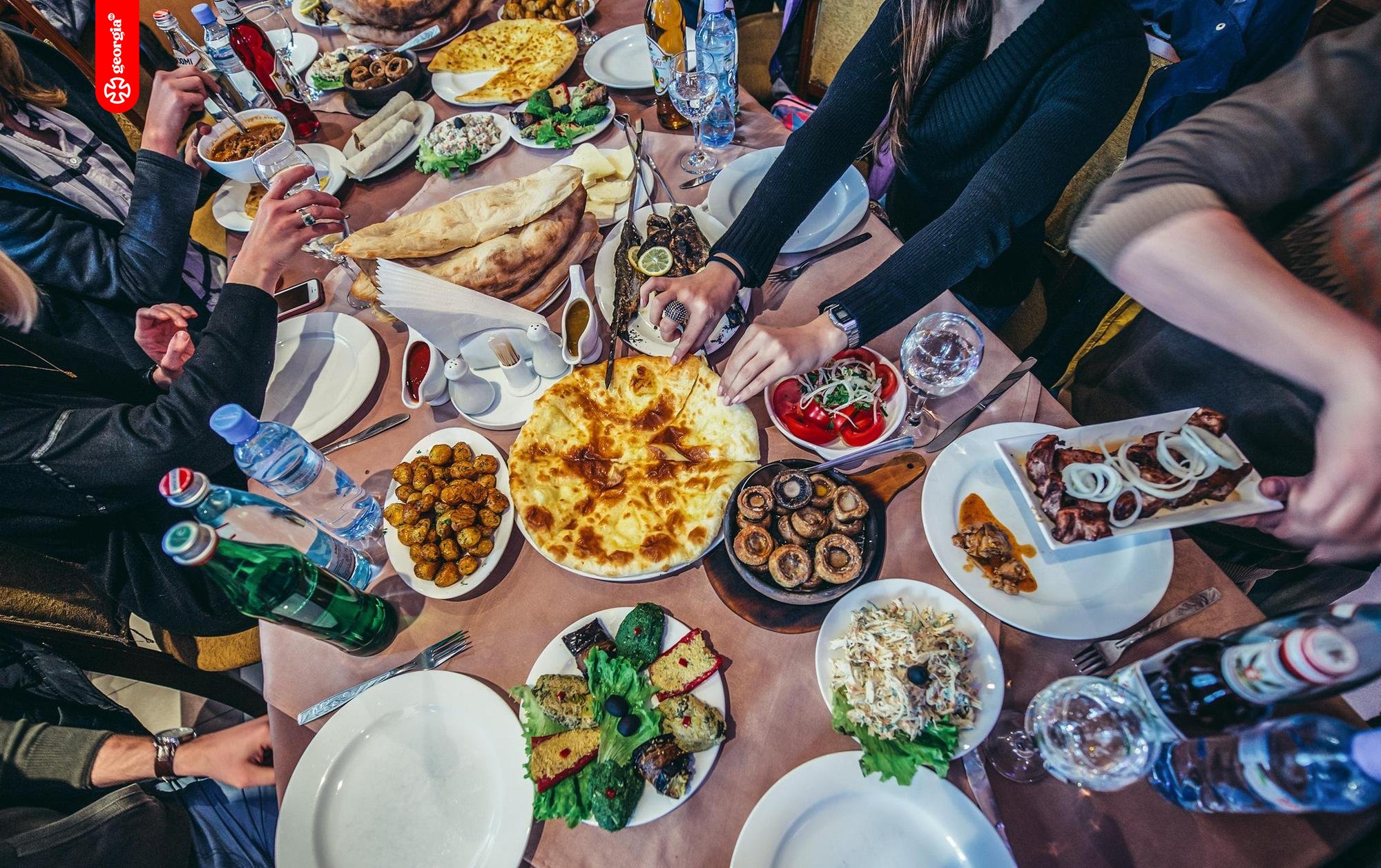
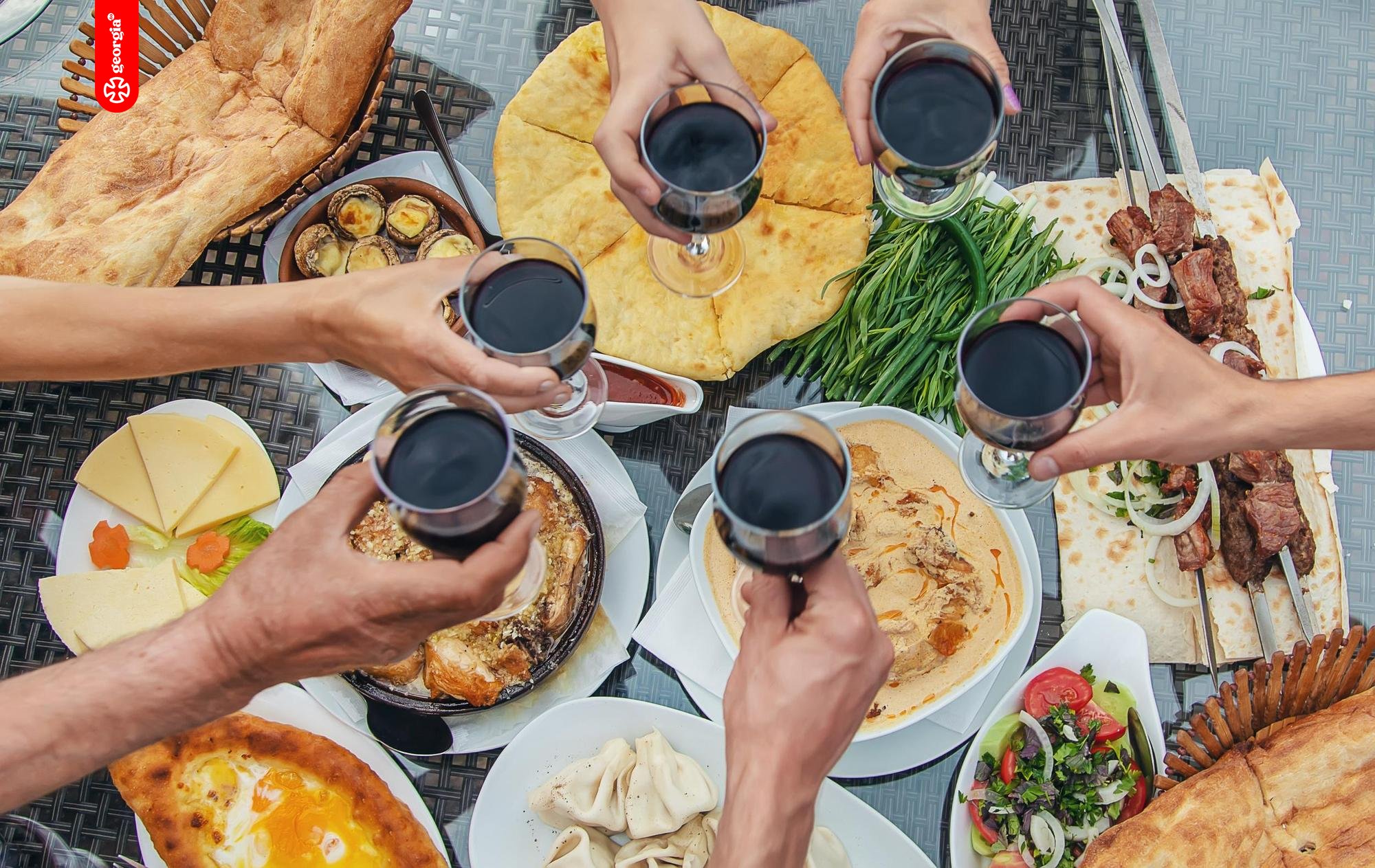
Long before a guest crossed the threshold of a Georgian home, they were welcomed with bread and salt — PURI DA MARILI.
Not because it was expensive.
Because it meant something.
It said:
"You are safe here."
"You are welcome here."
"You will not leave hungry."
Even today, those two simple words carry a meaning far greater than a meal.
Bread is HOSPITALITY.
Bread is RESPECT.
Bread is ABUNDANCE.
Before there was a feast, there was bread.
Bread is the promise that there will always be a place for one more person at the table.
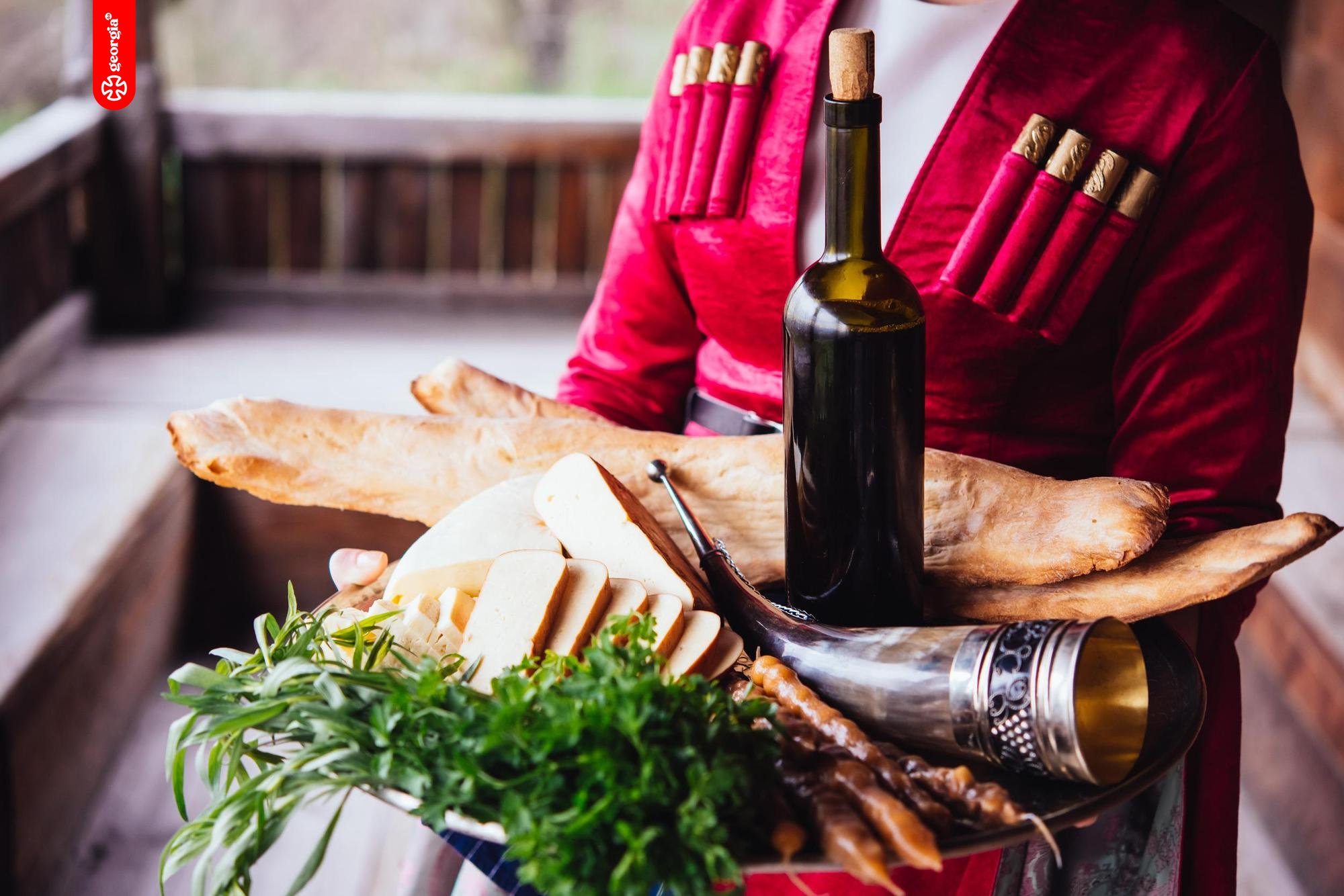
Then there is SHOTI.
The long, elegant bread baked in deep clay ovens called TONE.
Its pointed ends and curved body are instantly recognizable across Georgia.
In Kakheti, it is often longer, resembling a sword.
In Kartli, it takes a shorter form.
Some even believe its name is connected to ancient lunar beliefs that existed long before Christianity arrived in Georgia.
Imagine that.
A loaf of bread carrying echoes of beliefs so old that their origins are almost forgotten.
But Shoti is only the beginning.
Georgia didn't just bake bread.
It created an entire symbolic vocabulary through bread.

One of the most fascinating ritual breads is Bediskveri — literally, the Bread of Fate.
At New Year, families baked separate loaves for every member of the household.
As they baked, everyone watched closely.
If a loaf rose beautifully, it promised prosperity.
If it cracked or shrank, it was considered a warning.
Imagine placing your hopes for an entire year into a single loaf of bread.
Trusting your future to flour, fire and faith.
Another was Abri Puri, the ceremonial New Year bread of western Georgia.
It occupied the center of the festive table.
Around it stood fruit, honey, nuts, meat, and other symbolic foods.
The hostess would dip pieces of bread into honey and offer them to family members while blessing the year ahead.
A loaf became a wish.
A blessing became something you could taste.
In Khevsureti, families baked Ashali when a child became seriously ill.
Dozens of thin ritual breads were prepared and taken to a shrine.
Prayers were spoken.
The breads were shared among children.
Healing was not separated from community.
Faith was not separated from daily life.
And bread became the bridge between them.
Bread also became part of Georgia's spiritual life.
In churches, believers receive Antidoron — blessed bread shared after the liturgy.
Artos, the bread of Easter, symbolizes Christ's resurrection.
And Sefiskveri, the liturgical bread used during worship, remains an essential part of Orthodox tradition.
Even in prayer, bread is never far away.
Even weddings had their own language.
The magnificent Jvris Puri — Cross Bread — was decorated with symbols of life, fertility, birds, crosses, apples, and ancient solar motifs.
It was not simply served at the celebration.
It carried wishes for the future.
For prosperity.
For children.
For happiness.
For a family that would continue long after the wedding day itself was forgotten.
Some New Year breads were shaped like people.
Others like animals.
Others like farming tools.
Some were baked for cattle.
Some for sheep.
Some for the fields.
Some for the harvest yet to come.
In parts of Georgia, men received one type of bread.
Women another.
Children another.
Even the household animals had breads baked in their honor.
Every loaf had a purpose.
Every shape carried meaning.
Every detail belonged to a story.
Some breads were baked in complete silence.
In certain traditions, even a careless word was believed to affect their purpose.
Imagine believing that a loaf carried so much meaning that it deserved silence.
Not because of the ingredients.
Because of what it represented.
Perhaps none of this happened by accident.
Georgia is one of the oldest centers of wheat cultivation in the world.
People have been growing wheat here for nearly 8,000 years.
When a culture spends thousands of years living alongside bread, eventually bread becomes more than food.
It becomes part of its identity.
One of the most famous lines in Christian prayer asks:
"Give us this day our daily bread."
Not daily gold.
Not daily success.
Not daily power.
BREAD.
The simple thing that allows life to continue.
For centuries, Georgians understood exactly what that meant.
Because bread was never only food.
It was gratitude after harvest.
A blessing before a journey.
A welcome for a stranger.
A wish for a healthy child.
A memory of those who came before.
Most ancient rituals disappear.
Languages change.
Traditions fade.
Meanings are forgotten.
And yet, somehow, many of these breads survived.
Not only in museums.
Not only in books.
But in memory.
Passed from grandparents to children.
From village to village.
From one generation to the next.
Perhaps that is the true story of Georgian bread.
Not that it fed generations.
Though it did.
Not that it survived centuries.
Though it did that too.
But that it carried their stories.
Their fears.
Their gratitude.
Their hopes.
Their prayers.
Their love.
And after thousands of years,
IT STILL SPEAKS.